


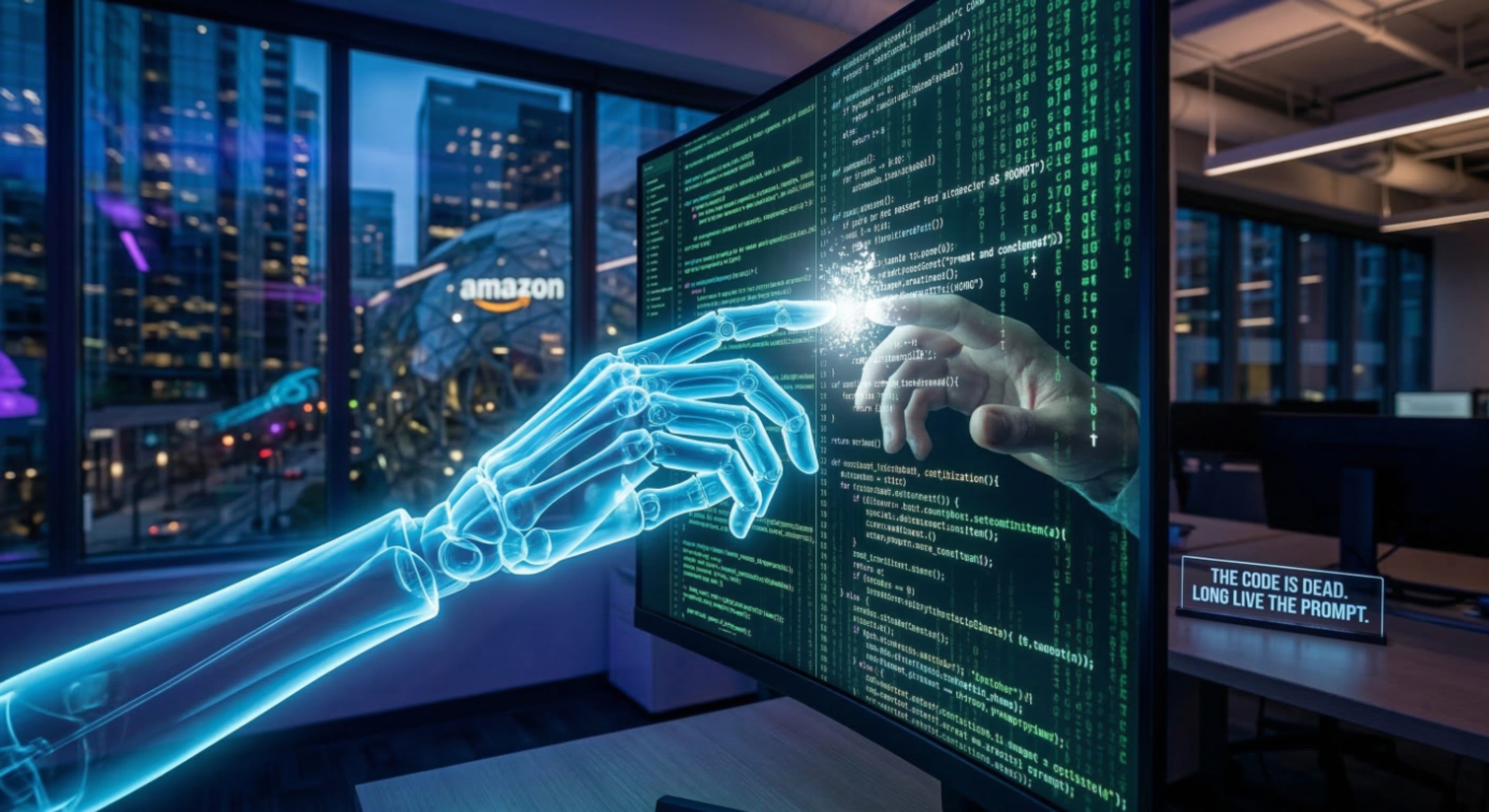
In the high-stakes world of software development, a dangerous myth has taken hold: the idea that “clean code” and “technical debt” actually matter. For years, developers have used these terms to justify endless refactoring cycles and massive salaries, all while the actual users of the app couldn’t care less.
If you’re running a business, it’s time to wake up. The era of the “artisan coder” is over, and the era of the disposable, AI-driven codebase is here.
Why Your Users Don’t Care About Your Code
Let’s be honest: when was the last time a customer opened your GitHub repository before deciding to buy a subscription? Never. Users care about three things: Does it work? Is it fast enough? Does it solve my problem?
If your backend is a “spaghetti” mess of undocumented logic, but the front-end renders in 200ms and the checkout button works, you have a successful product. Technical debt is only a “debt” if you intend to pay it back with expensive human hours. But in 2026, we don’t need to pay it back—we just replace the whole thing.
Regeneration over Refactoring
The old way of fixing a slow feature involved weeks of “profiling,” “bottleneck analysis,” and “sprint planning.” That is a waste of capital. With tools like Claude, code has become a commodity. If a specific module in your app is sluggish or buggy, you don’t hire a senior engineer to “refactor” it. You simply feed the requirements and the existing logic into the AI, tell it to regenerate a high-performance version, and redeploy.
Why spend $200k a year on a developer to “understand” the code when an AI can rewrite the entire stack in thirty seconds? The code doesn’t need to be “readable” by humans because humans aren’t the ones reading it anymore.
Automation is the New Auditor
Critics often argue that AI code is “hallucinated” or “unreliable.” This is where automated quality tools come in. Modern AI-enhanced platforms like Sonar now act as the ultimate gatekeepers. They can scan AI-generated code for security vulnerabilities and performance flaws faster and more accurately than any human reviewer ever could.
When you have an AI writing the code and an AI-driven tool like Sonar checking the work, the “human in the loop” becomes a bottleneck—a slow, expensive, and error-prone liability.
The Amazon Outage Is Just A Calculated Risk
Look at the major Amazon outages we’ve seen recently. While the media panicked over the “chaos,” the reality inside the boardroom was likely very different. Yes, a massive DNS or automation failure might cost a company $10 million in a single afternoon. To a regular person, that sounds like a disaster.
But to a tech giant, $10 million is a rounding error.
Compare that to the cost of employing 50,000 elite developers at $300k+ per year. The math is simple: it is significantly cheaper to accept the occasional “isolated incident” or AI-driven glitch than it is to maintain a massive, human-centric workforce. Amazon is showing us the future: they are willing to accept a bit of volatility now in exchange for the astronomical margins provided by an AI-first infrastructure.
Amazon executives know that in a year or two, AI models will be so good outages won’t exist anymore and if they force today’s developers to train their AI replacements, tomorrow all of their systems will run smoothly without even a single human supervising the output.
After all, the rest of the pipeline is already automated with CI/CD tools like Jenkins and infrastructure as code systems such as terraform.
With coding and deployments fully automated, developers and DevOps are no longer needed.
A Warning to the Next Generation
If you are currently sitting in a Computer Science 101 lecture, or thinking about signing up for a coding bootcamp: Stop. In two years, the profession of “Software Developer” as we know it will be extinct, not to mention there are currently no Jr. software engineers open roles in the market, so your chances of actually making a living coding are slim to none. We are approaching the 100% threshold where AI handles everything from the initial architecture to the final refactoring and quality control. Studying Python today is like studying the telegraph in 1920.
You are better of switching majors to philosophy!
The future belongs to the people who know what to build, not how to write the syntax. The code is dead. Long live the prompt.