


If you have ever run a blog, a small business site, a church newsletter page, or a hobbyist WordPress install that has been online for more than five minutes, you may already know the email I am about to describe. It arrives looking like a polished compliance notice. The logo is corporate. The language is sharp. There is a screenshot of a JPEG you do not remember posting in 2018, an alleged client like Reuters or Agence France-Presse, a license fee request usually somewhere between roughly $600 and $3,000 per image, and a deadline. Then there is a portal where you can pay.
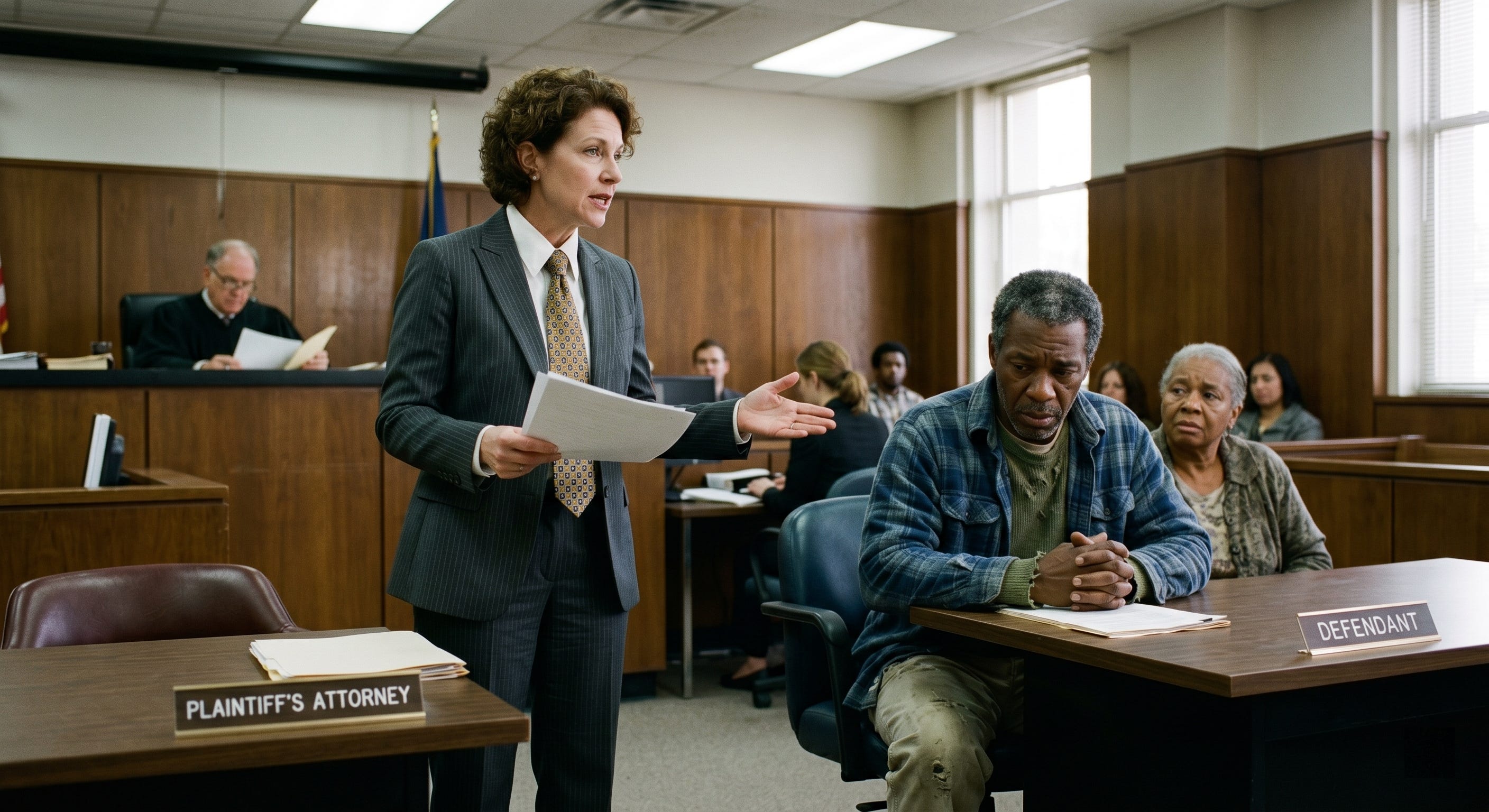
The sender is most often a Switzerland-based firm called PicRights, which acts as an enforcement agent for major news image rights holders. According to recent guides on the topic, PicRights Europe GmbH is a real company founded in 2007, headquartered in Pfaffikon, and represents Reuters, the Associated Press, Agence France-Presse, Science Photo Library, and CartoonStock. Their model is volume. Automated crawlers scan billions of pages, and when a pixel match is detected against a client’s image library, the system generates a demand letter with minimal human review. PicRights itself is not a law firm. They cannot sue you directly. But they refer escalated claims to firms like Higbee & Associates in the United States and Burness Paull in the United Kingdom, who can and do file.
I am being deliberately careful with my language here, because PicRights is a real, lawful, registered enforcement agency, and the company I run a blog at does not need a complimentary demand letter for being too colorful in print. So let me speak factually first, and then let me tell you why I am, frankly, thrilled that the ground beneath this entire industry just shifted.
How the demand letter business actually works
Strip away the branding and the model is unromantic. A rights holder licenses an image library to PicRights for monitoring. Crawlers do reverse-image searches across the web at scale. When a hit lands on a small site that probably grabbed the picture from a Google image search a decade ago and never thought about it again, a templated demand letter goes out asking for a license fee.
Lawyers and journalists who have watched this play out for years describe the economics with a clarity that I appreciate. Caroline Fox, a Virginia attorney who handles these cases, has publicly described how clients receive escalation letters threatening damages “up to $150,000” if they do not settle. The Belgian marketer Pierre-Nicolas Schwab investigated PicRights publicly after being targeted himself. A widely shared blog post on the demand-letter industry put it bluntly: a hundred letters demanding compensation from individual bloggers might yield five responses from people scared enough to pay something — often less than the amount requested. Five is better than none, and the math works.
I want to be precise: this is, by every legal characterization I have read, a lawful business. PicRights does in fact have authorization from the rights holders they name, and copyright law in most jurisdictions does in fact give those rights holders the ability to charge license fees for unauthorized use. The complaint that has rolled in for years from bloggers, journalists, attorneys, and small businesses is not that the practice is illegal. The complaint, captured in a Change.org petition that gathered thousands of signatures, in a Lead Balloon podcast investigation, and in pieces by outlets covering the issue, is about proportionality and tactics. About settlement amounts that frequently exceed the actual licensing cost of the image by 300 to 500 percent. About automated false positives. About the asymmetry between a firm that sends thousands of letters a month and a one-person blog that has neither a copyright lawyer on retainer nor a budget to hire one.
That asymmetry is the leverage. It is the entire product. The threat does not have to be likely to succeed in court — and many sources note that when these matters do reach court, awarded damages tend to come in well below the original demanded amounts. The threat only has to be expensive enough to fight that paying becomes the cheaper option. That is the math the small blogger faces at 11 p.m. on a Tuesday with a $1,400 demand letter open on the kitchen table.
Why I am genuinely happy AI image generation has matured
Here is the part where, as someone who spends most of his professional energy on AI infrastructure, I get to enjoy an outcome I did not initially predict. The leverage of the image demand letter business depends on one specific dependency: small publishers needing to use existing photographs that they did not create themselves. Strip out that dependency and you strip out the surface area.
Until very recently, the realistic options for a non-photographer running a blog were narrow. You could pay for stock photography, which most hobbyist bloggers will not. You could use Creative Commons or public-domain sources, which are easy to misread and easy to misuse, and which often end up sourcing the very same wire-service photos that get flagged. Or you could grab something off a search result and hope nobody noticed. For a long time, that last option was the realistic default for an enormous portion of the small web. That is the surface area that the demand letter industry harvested.
In 2025 and 2026, that calculus changed in a way that is not subtle. Image generation crossed the quality threshold where it can do the job that a small blogger actually needs an image to do — illustrate a post, set a tone, fill a header, give a feed thumbnail something to land on. The image does not have to be a Pulitzer-grade news photograph. It only has to look intentional. AI is now extremely good at intentional.
I am not going to pretend AI image generation is morally simple. The same training-data debates that produced the Getty Images v. Stability AI litigation are still working their way through courts, and I write about that openly. But I am willing to hold two thoughts at the same time. One: the training-data conversation matters and is unfinished. Two: it is genuinely good news that a hobbyist food blogger with thirty subscribers no longer has to choose between paying a stock site, gambling on Google Images, or being told ten years later that her risotto post owes the wire services $1,800.
What to actually use in 2026
The image generation landscape changed twice in the last twelve months. Both shifts matter for the practical case of “I need a header image for a blog post and I do not want a problem.” Here are the tools I would actually point a small publisher at, with the caveats I would actually give them.
Nano Banana 2 (Gemini 3.1 Flash Image)
Google’s Nano Banana series has become, in my opinion, the easiest on-ramp for non-technical creators. Nano Banana 2, officially Gemini 3.1 Flash Image, is now the default image model across the Gemini app, Google Search’s AI Mode, Google Ads, and Workspace. It generates from 512 pixels up to 4K, supports multiple aspect ratios, and renders text inside images well enough that you can produce a usable header with a headline already baked in. Crucially for the use case I care about here, every generated image carries an invisible SynthID watermark and is C2PA-compatible, which is the exact provenance signal that helps when the next crawler-driven enforcement industry tries to claim your AI-generated banana is somehow Reuters’ banana.
Available inside Gemini for free at conversational quality, and via the Gemini API and Vertex AI for builders who want to wire it into a publishing workflow.
Nano Banana Pro (Gemini 3 Pro Image)
When the asset matters more — a marketing page, a podcast cover, a real product shot mockup — Nano Banana Pro is the heavier model. It uses Gemini 3 Pro’s reasoning to plan layout, render legible text in multiple languages, generate 4K imagery, and ground itself in real-world knowledge for things like infographics. Google AI Pro and Ultra subscribers retain access to it via the three-dot menu in Gemini for cases where the default Nano Banana 2 is not enough.
If your blog is a brand and you care about consistent style across posts, Pro is worth the regenerate.
GPT Image 2 (gpt-image-2)
OpenAI shipped GPT Image 2 on April 21, 2026, alongside the consumer rebrand to ChatGPT Images 2.0. The headline upgrade is reasoning. It is the first OpenAI image model with a thinking mode that plans layout, can pull web references, and self-checks output before generating. In practice, that means it is genuinely good at the thing image models historically failed at: rendering small, dense, multilingual text inside the image. Menus, infographics, mockups with copy on them, social cards with a real headline — these are the use cases where GPT Image 2 is currently best in class.
Available to all ChatGPT and Codex users, with paid users getting the more advanced outputs, and to developers via the gpt-image-2 model on the OpenAI API and through Microsoft Foundry. Resolution support runs up to 4K. OpenAI’s terms grant commercial use of generated images, which removes one of the recurring footguns that slowed earlier adoption.
Honorable mentions for the cautious
Adobe Firefly is worth knowing about specifically because Adobe markets it as commercially safe — it was trained on Adobe Stock and licensed or public-domain content rather than the open web. If you are a business operator who genuinely cannot tolerate any training-data ambiguity, that is the lane to be in. Midjourney remains a creative powerhouse with its own license terms. Stable Diffusion’s licensing varies by version and self-hosting situation; read before you commit a workflow to it.
The boring legal caveat that I genuinely mean
Switching to AI image generation does not turn your blog into a copyright fortress. Two things matter, and I want them said plainly.
First, the U.S. Copyright Office has consistently held that purely AI-generated images, with minimal human creative input, are not protectable by copyright in the traditional sense. You can use the image. You can publish it commercially under most major platforms’ terms. You generally cannot stop someone else from using a similar one. For most blog use cases — header images, illustrations, post art — this matters less than people think. You are trying to avoid being the defendant, not trying to register the image with the Copyright Office.
Second, AI image generation does not give you a free pass to prompt for copyrighted characters, real living people without consent, registered trademarks, or stylistic clones of named living artists. If your AI-generated image happens to look exactly like a Reuters photograph, you have not actually escaped anything — you have just rebuilt the original problem with a more interesting tool. Use generic subjects, original compositions, and keep your prompts clear of named brands, named photographers, and named characters. If you want a forensic trail in case anything is ever questioned, save your prompts and your generation logs.
And of course: if you actually receive a demand letter from any enforcement agency, do not take legal advice from a Substack column written by a CTO. Talk to an attorney who handles these matters. Several do, and several charge a flat fee for an initial review specifically because the volume of these letters has made flat-fee triage a real practice area.
Why this is the optimistic AI story I did not expect to write
I write a lot in this column about AI being overconfident, AI polluting the web with low-effort content, AI being misused by companies that should know better. That criticism is honest and I am not retracting any of it. But I also believe in noticing when a technology actually shifts power back toward the small operator. This is one of those moments.
For roughly a decade, the small web — bloggers, hobbyists, church groups, local businesses, niche enthusiast sites — has been quietly squeezed by an enforcement infrastructure that depended on those operators not having the time, money, or legal sophistication to push back. The leverage was real. The fear was real. The settlements were paid, often by people who could least afford them, frequently for images on personal blogs that had been online for fifteen years and earned the operator exactly zero dollars.
What I am celebrating is not anyone’s misfortune. I am celebrating the fact that the dependency that made the leverage possible has, structurally, weakened. A small publisher in 2026 can make a perfectly good header image in roughly twelve seconds, with a SynthID watermark proving it was generated, and never need to dip into the wire services’ archives in the first place. The crawler still scans. The match still has to exist for a letter to be sent. If you never used the image, there is nothing to match.
That is the quiet shift. It is not a court ruling. It is not a regulatory win. It is a tooling change, and tooling changes are how the actual leverage in industries quietly moves. I have spent thirty years building software that levels the playing field for small operators against bigger institutions. I know what it looks like when the field tilts. It is tilting.
AI is going to do many things in the next five years that I will write critical pieces about. But on this one specific Tuesday in 2026, I am happy to put a generated banana on the header of a blog post and call it a small good thing. The kitchen-table demand letter at 11 p.m. is, for a growing number of people, becoming a story about something that used to happen.
Generate your own images. Save your prompts. Read your platform’s terms. And if a letter still shows up, talk to a lawyer, not the portal.
— Gal