


In February 2026, Anthropic published a breathless report alleging that three Chinese AI companies—DeepSeek, Moonshot AI, and MiniMax—had conducted “industrial-scale” distillation campaigns against its Claude model. Over 16 million queries. Roughly 24,000 fake accounts. Proxy networks described as “hydra clusters.” The language was pure techno-thriller: national security risks, weaponized capabilities, authoritarian surveillance. Google followed with its own report, claiming more than 100,000 prompts had targeted Gemini’s reasoning capabilities. OpenAI told Congress that DeepSeek was developing “new methods to disguise” its copying efforts.
The American AI industry wanted the world to understand something: these Chinese companies were thieves.
There’s just one small problem with this narrative. The American AI companies built their entire industry on the exact same principle—taking other people’s work without permission—except they did it at a scale that makes 16 million API queries look like a rounding error.
The Original Sin: Training on Everything, Asking No One
Let’s rewind. Every major American AI model—GPT-4, Claude, Gemini, Llama—was trained on datasets built from the open internet. Books, articles, code repositories, forum posts, academic papers, song lyrics, private blogs. Billions upon billions of words, scraped and ingested without a single licensing agreement, without a single permission slip, without a single dollar paid to the people who actually wrote those words.
This isn’t speculation. It’s established legal fact.
Anthropic—the very company now accusing Chinese firms of theft—settled a $1.5 billion class-action lawsuit in September 2025 after a federal judge found that the company had downloaded over 7 million pirated books from Library Genesis and Pirate Library Mirror to train Claude. Internal company communications showed employees raising concerns about the legality of this approach. The judge called Anthropic’s piracy “inherently, irredeemably infringing.” That’s not my characterization—it’s a direct quote from the court’s summary judgment ruling. The settlement works out to about $3,000 per book for an estimated 500,000 works. Pocket change for a company that raised $13 billion in a single funding round.
OpenAI faces over 50 copyright lawsuits. The New York Times is suing for billions, alleging millions of its articles were used to train ChatGPT without consent. Authors including Sarah Silverman and Ta-Nehisi Coates are suing. Indian news agencies, Bollywood music labels, German composers—the list is global and growing. OpenAI’s consistent defense? Fair use. We didn’t need your permission because what we did with your work was “transformative.”
Meta used Books3—a dataset of pirated books—to train Llama. Google digitized millions of books for Google Books and now feeds its vast data empire into Gemini’s training pipeline. Every one of these companies made a calculated bet that it was cheaper to scrape first and litigate later than to build a legitimate data supply chain.
And it worked. The American AI industry is now valued in the trillions of dollars. Built on a foundation of other people’s words, used without asking.
Now Let’s Talk About What the Chinese Companies Actually Did
DeepSeek generated about 150,000 conversations with Claude. Moonshot AI racked up 3.4 million exchanges. MiniMax hit 13 million. They used proxy services and fake accounts to access an API they weren’t supposed to use, and they harvested the outputs to improve their own models.
Was it against Anthropic’s Terms of Service? Absolutely. Was it a violation of regional access restrictions? Yes. Was it distillation—training cheaper models on the outputs of more expensive ones? Almost certainly.
But let’s be precise about what distillation actually is. It’s querying a model and using the responses to train another model. The “theft” here isn’t stealing source code or model weights. It’s asking questions and learning from the answers. When a student learns calculus from a professor, we call it education. When a Chinese company learns coding patterns from an American chatbot, we call it espionage.
The irony is exquisite. Anthropic trained Claude on millions of pirated books—actual copyrighted works, downloaded from actual pirate websites—and the legal system treated it as a civil matter resulting in a settlement that amounts to a small operating cost. Chinese companies queried an API (an interface literally designed to answer questions) and the industry frames it as a national security crisis.
The Robin Hood Problem That Silicon Valley Doesn’t Want You to See
Here’s where the story gets interesting. The Chinese AI models that are supposedly built on stolen American intelligence? Most of them are open source.
DeepSeek’s R1 model, which shook the entire AI industry in January 2025, is open source. It was trained for roughly $6 million—compared to the billions spent on GPT-5. Alibaba’s Qwen family, which surpassed 700 million downloads on Hugging Face by January 2026, is fully open source under Apache 2.0 licensing. By late 2025, Chinese open-source models had rocketed from 1.2% to nearly 30% of global AI usage. Qwen derivatives accounted for over 40% of all new language model variants on Hugging Face, surpassing Meta’s Llama.
Think about what this means. American companies scraped the collective intellectual output of humanity, locked it behind proprietary APIs, and charge $20 a month (or significantly more for enterprise access) for the privilege of interacting with a machine trained on your work. Chinese companies took those capabilities—however they acquired them—and gave the technology away for free.
OpenAI charges premium prices for GPT-5. Anthropic gates Claude behind subscriptions and API fees. Google monetizes Gemini through cloud services. Meanwhile, DeepSeek’s R1 costs a fraction of comparable Western models. Qwen 2.5-Max runs at $0.38 per million tokens. Anyone on Earth can download these models, run them locally, fine-tune them, and build products. No subscription. No API key. No permission needed.
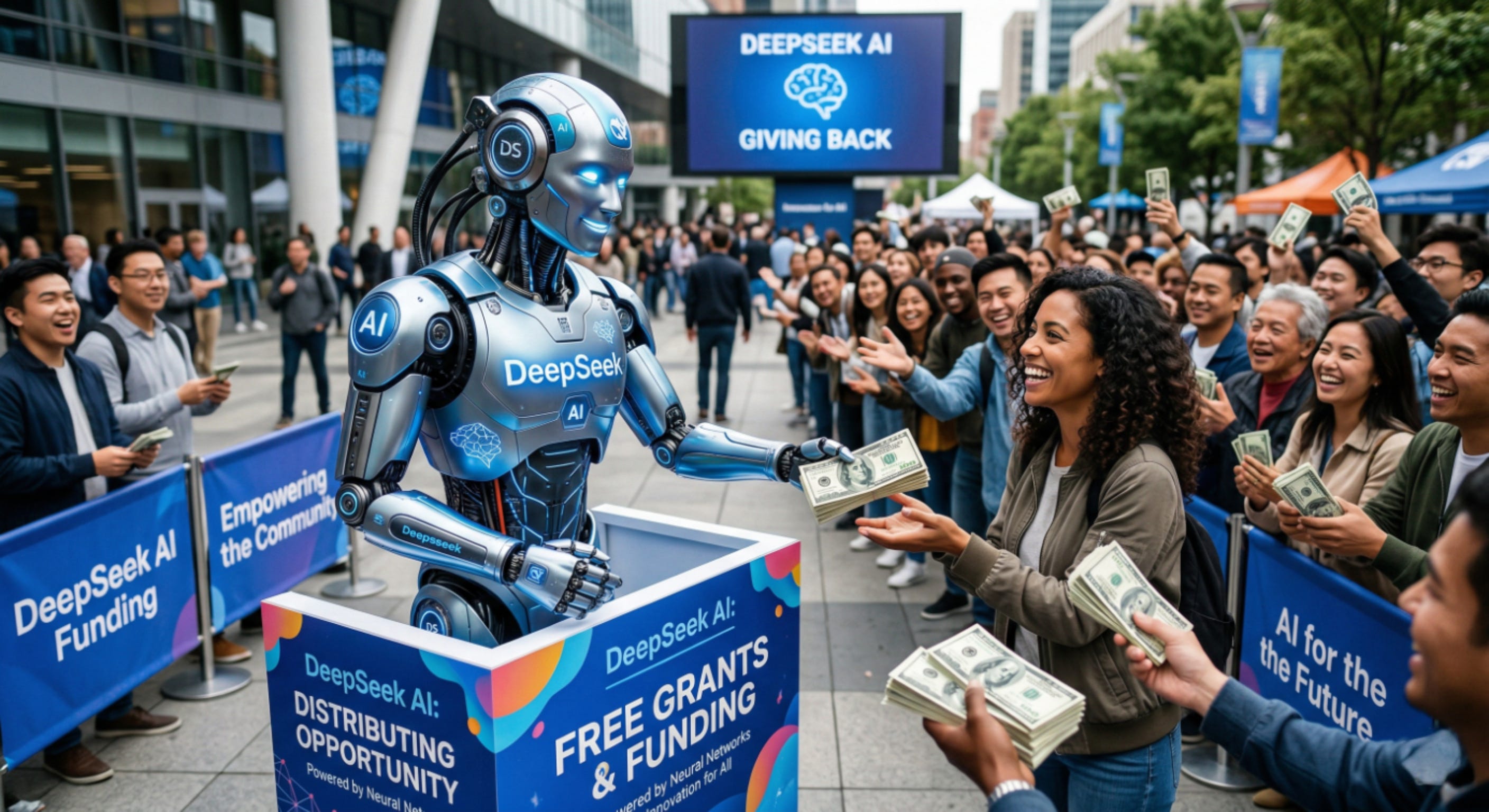
The American AI companies are the rich who stole from everyone—from authors, from musicians, from journalists, from coders who shared their work on GitHub. The Chinese AI companies took from the rich and gave to the poor. That’s not my spin. That’s the structural reality of how the economics work.
Airbnb CEO Brian Chesky publicly said his company favors Alibaba’s Qwen over ChatGPT for customer service because it’s “fast and cheap.” Chamath Palihapitiya moved his workflows from Amazon’s Bedrock to Moonshot’s Kimi because it was more performant. Japanese research institutions are building on Qwen. Startups worldwide are choosing open Chinese models not because they’re Chinese—but because they’re free, they’re good, and they’re open. The very openness that Silicon Valley claims to celebrate in its mission statements but systematically refuses to practice.
The Hypocrisy Is the Point
When OpenAI scraped the entire internet, it was “innovation.” When DeepSeek queried an API, it was “espionage.”
When Anthropic downloaded 7 million pirated books, it was a “legacy issue” resolved with a settlement. When Chinese firms used 24,000 proxy accounts, it was an “industrial-scale campaign” threatening national security.
When Meta released Llama as open-weight (while still training on pirated data), it was “democratizing AI.” When DeepSeek released R1 as open source, it was “proliferating dangerous capabilities.”
The framing is always the same: when we do it, it’s progress. When they do it, it’s theft. And the “we” and “they” aren’t defined by the ethics of the action. They’re defined by geography and the flow of money.
Sam Altman himself conceded in March 2025 that OpenAI may have been “on the wrong side of history” by maintaining a closed approach. That’s an extraordinary admission from the CEO of the world’s most valuable AI company—that the open model was right all along. The model the Chinese companies have been pursuing from the start.
What the National Security Framing Is Really About
Anthropic’s report doesn’t just accuse Chinese companies of Terms of Service violations. It explicitly frames distillation as a national security threat, warning that “illicitly distilled models lack necessary safeguards” and could be used for “offensive cyber operations, disinformation campaigns, and mass surveillance.”
This is a company that pirated 7 million books lecturing others about safeguards.
The national security framing serves a specific economic purpose. If distillation is merely a ToS violation, it’s a business problem. If it’s a national security threat, it justifies government intervention—export controls, sanctions, regulatory barriers—that protect American companies’ market position. It’s regulatory capture dressed up as patriotism.
Google’s own report inadvertently undercuts the panic. As the company noted, distillation attacks “do not typically represent a risk to average users, as they do not threaten the confidentiality, availability, or integrity of AI services.” The risk is “concentrated among model developers and service providers.” In other words: this isn’t a security issue. It’s a competition issue. American AI companies don’t want competitors who can match their capabilities at a fraction of the cost, especially when those competitors give the technology away.
The Uncomfortable Math
DeepSeek reportedly trained R1 for $6 million using 2,000 H800 GPUs. Comparable Western models cost $80–100 million on 16,000 H100 GPUs. When DeepSeek’s efficiency was revealed, Nvidia lost $589 billion in market cap in a single day—the largest single-day loss for any company in stock market history.
That market reaction tells you everything. Wall Street wasn’t panicking about national security. It was panicking about margins. If you can build a frontier-competitive AI model for a twentieth of the cost, the entire economic thesis of the American AI industry—that you need tens of billions in capital expenditure, that you need the most expensive chips, that you need to charge premium prices—collapses.
The distillation narrative is a moat-building exercise. American AI companies have one remaining competitive advantage: they got there first and they have more compute. If Chinese companies can achieve comparable results through efficiency, distillation, open-source collaboration, and yes, learning from Western models, then the multi-hundred-billion-dollar valuations of OpenAI and Anthropic start looking shaky.
Who Actually Benefits?
The authors whose books were pirated by Anthropic are getting $3,000 per work. The journalists whose articles trained ChatGPT are getting nothing (the cases are still in litigation). The musicians suing Anthropic for lyrics scraping just had their piracy claims denied by the court. The coders whose GitHub commits became training data never even had a chance to say no.
Meanwhile, a developer in Lagos or Bangalore or São Paulo can download DeepSeek R1 or Qwen 3, run it on modest hardware, and build an AI-powered application without paying a penny to any of the companies that spent billions building—and then hoarding—comparable technology.
The Robin Hood comparison isn’t perfect. Robin Hood had clear moral intentions. Chinese AI companies are pursuing market share, geopolitical influence, and commercial advantage. But the structural outcome is the same: capabilities that were locked behind corporate paywalls are now freely available to anyone, anywhere, for any purpose.
The American AI industry wants you to be outraged that Chinese companies queried an API 16 million times. I’d like you to also be outraged that American companies scraped the collective creative output of humanity without asking, locked the resulting intelligence behind subscription fees, and now want government protection from competitors who are giving it away for free.
The Future Is Open (Whether Silicon Valley Likes It or Not)
The Chinese open-source AI movement isn’t going away. By every metric—downloads, derivative models, global adoption, cost efficiency—it’s accelerating. Dario Amodei, Anthropic’s own CEO, acknowledged after DeepSeek’s breakout that export controls are “not a way to duck the competition” and that American companies “must have better models” to prevail.
He’s right. The answer to Chinese open-source AI isn’t more walls. It’s better models, legitimate data sourcing, and genuine openness. But that requires something the American AI industry has consistently refused to do: compete on merit instead of moats.
The era of AI built on stolen words and closed gates is ending. The only question is whether the companies that built their empires on pirated books and scraped web pages will have the self-awareness to stop calling everyone else thieves.
I wouldn’t bet on it.
Gal Ratner is an award-winning CTO with 30+ years of experience in software architecture, AI, and scalable platform development. He is the CTO of WhiteStar Labs and co-host of the Edge Grip Podcast. Find him at galratner.com.