


American retailers just announced a new strategy. They’re going to spend their way out of the problem.
According to The New York Times, the largest retailers in the country are on track to spend roughly $20 billion this decade remodeling their physical stores. Walmart alone is in the middle of a $9 billion remodel program and recently announced upgrades to another 650 supercenters. Target’s CFO has committed about $1 billion in 2026 for new stores and renovations. Coresight Research forecasts 5,500 new store openings in 2026 — a 4.4% jump over last year. Nearly 78% of retailers say they’re putting moderate or significant capital into brick and mortar.
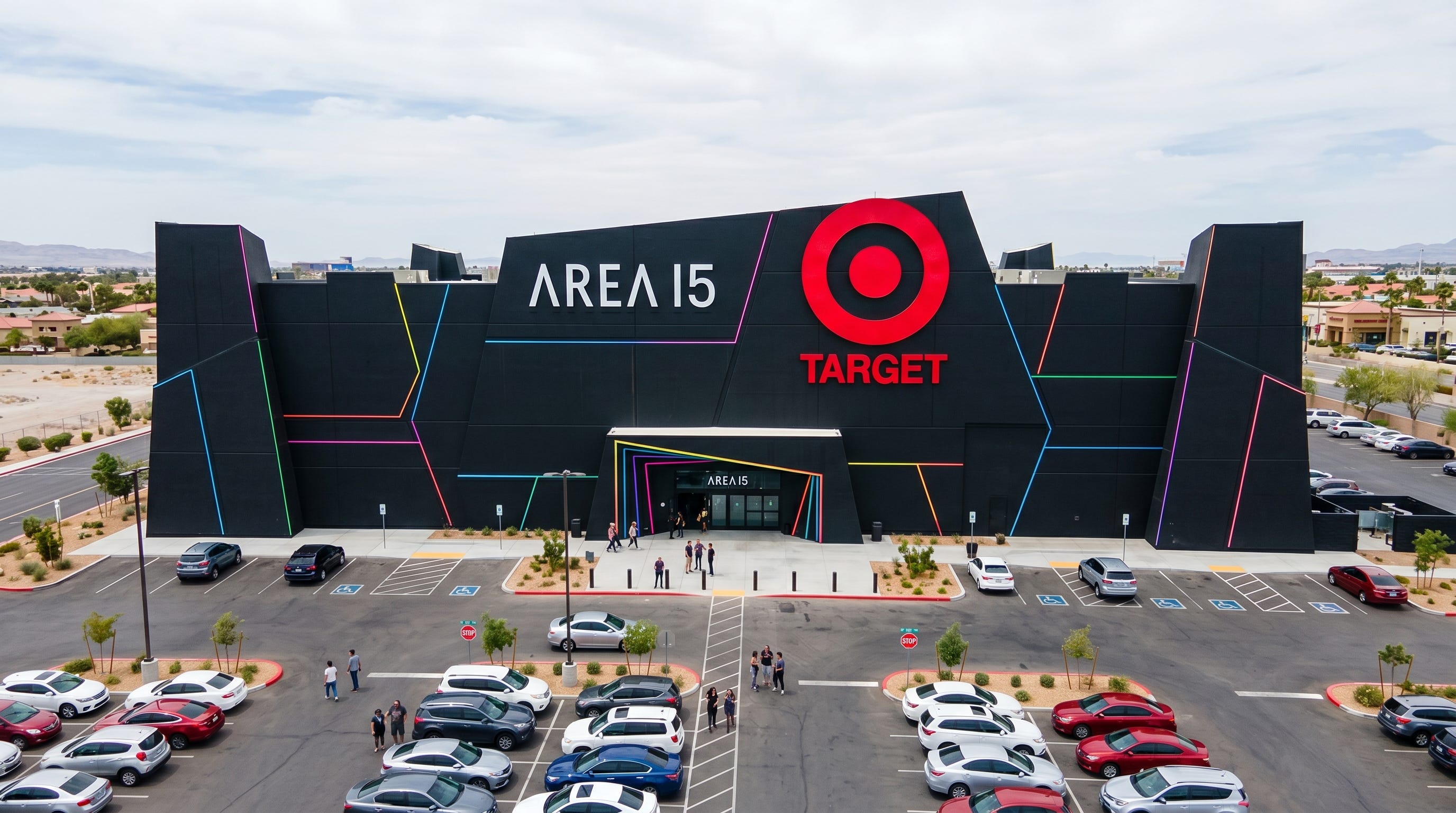
You read those numbers and you think: maybe physical retail is back. Maybe the apocalypse was overblown. Maybe shoppers really do want to come back to the mall.
Then you read the other column.
Capital One puts the current U.S. mall count at about 1,200, projected to fall to roughly 900 by 2028. One industry analysis says nearly 87% of large shopping malls could shut within a decade. Macy’s is closing 66 stores in 2025 and around 150 by 2026. JCPenney is closing locations. Kohl’s is closing 27. Joann shut roughly 850. Forever 21 liquidated all 350 U.S. stores. Party City closed about 700. Big Lots, nearly 300. Coresight projected up to 15,000 retail closures in 2025 alone — roughly double the prior year. Indoor mall vacancy ran 9% in 2025, up from 5% in 2024. In the first six months of 2025, nearly six million more square feet were vacated than occupied.
That is not a recovery. That is a triage tent next to an open casket showroom.
And yet the survivors keep writing nine-figure checks to re-tile the floors.
You can’t renovate your way out of a customer who never wanted to come in.
Let me tell you why $20 billion in store remodels is not going to drag the modern American shopper back into a parking lot, why malls that want to survive need to stop pretending they’re in the shopping business, and why a manufacturer who pays for shelf space in 2026 is paying rent on a ghost.
The seven frictions of in-person retail
When a retail executive looks at a slumping comp number, they see a marketing problem. When the customer looks at the same store, they see a list of reasons not to go. I went through my own list. It is not romantic. It is operational.
One. The drive. A trip to the mall in any growing American metro is not a fifteen-minute errand. It is a thirty-minute commute, a fight for a parking space, and a thirty-minute return trip. That is an hour of windshield time before you have looked at a single product. UPS will bring the same product to my door for free while I am answering email.
Two. The hygiene. Every shirt on a rack at a department store has been pulled off, tried on, balled up, sweated through, and re-hung by people I have never met. Every lipstick at the testing counter is a swab. After 2020, that stopped being a quirky thing to ignore. It became a baseline objection. The store wants me to handle merchandise that hundreds of other strangers have handled. The website ships me a sealed box.
Three. The line. Self-checkout was supposed to solve this. It did not. I am still scanning my own groceries while a uniformed employee watches me, and at the apparel store I am still waiting behind a customer who is returning a sweater with a receipt from 2023. Online checkout is one tap.
Four. The markup. The honest version of this is that the supply chain has been laid bare. The shoe in the mall and the shoe on Temu and the shoe on AliExpress are often coming out of the same factory in Guangdong with different stickers. American retailers used to be the gatekeepers of taste; that was their margin. The internet repriced them. When I can buy the same item online for 20% of the storefront price, the storefront is selling me a markup and a story. The markup pays the rent on a building I did not want to drive to.
Five. The sales pressure. A commissioned salesperson is not on my side. They are on the brand’s side. They are paid to move SKUs, not to solve my problem. A product page with verified reviews, comparison tools, and a no-question return window is a more honest broker than a stranger in a vest who wants me to upgrade.
Six. The time tax. A real shopping trip — the kind retailers nostalgically describe as “the experience” — burns half a Saturday. Half a Saturday for a single transaction. I have a podcast to produce, a book to write, training to get to, and a business to run. My time is the most expensive line item in my life. The mall taxes it.
Seven. The brand politics. This is the one the boardroom does not want to talk about, and it is the one with the cleanest data. When Anheuser-Busch ran a single sponsored Bud Light promotion in 2023, the brand lost roughly a third of its sales in three months and the parent company’s stock dropped 20% in a month. Analysts described it as a permanent 15% decline. The brand has still not recovered to its prior position; it now markets through college football. Target’s comparable sales fell 5.4% the quarter after its 2023 Pride merchandising controversy. E-commerce sales fell 10.5% that same quarter. Whatever you personally believe about the underlying issues, the consumer behavior is now on the record: when a national retailer takes a tribal political position, a measurable share of its customers walks out and does not come back. Customers who used to be apolitical about where they bought paper towels now ask the question. The bill for that has already been written, and shareholders paid it.
Add it up. The friction is not a single objection. It is a stack. The store has to overcome seven of them in a row to win the transaction, and the website has to overcome none of them. The remodel does not address any item on the list. A nicer ceiling does not shorten the drive, sanitize the hangers, kill the line, fix the markup, mute the salesperson, give me back my Saturday, or de-politicize the cash register.
The math the renovations don’t fix
Look at where retail actually grew. The U.S. spent roughly $1.2 trillion online in 2024 — about 16.1% of total retail, the highest share on record. Nonstore retail has been the fastest-growing line item in the U.S. Census retail report for years. Department stores have been in decline since 2001. The structural curve was set before COVID; the pandemic just compressed the timeline.
Meanwhile, the U.S. is wildly over-stored. The country has roughly 24 square feet of retail space per person — about five times more than Canada or Germany. We did not build for the population we have. We built for a population that drove to a mall four times a month because there was nowhere else to go. That population is gone. They did not move. They went online.
So when retail executives ask each other how to fill the empty floor, they keep arriving at the same answer: experiences. “Experiential retail.” “Phygital.” “Community-driven spaces.” Dick’s puts climbing walls and batting cages into its House of Sport stores. Uniqlo, Coach, and Ralph Lauren add cafés. Best Buy runs in-store consultations and tech workshops. Simon Property Group leans on its 2 billion annual visits and pitches malls as “destinations” that supposedly even Gen Z still wants.
That impulse is correct. The execution is wrong.
Adding a café to a Ralph Lauren store does not make the store an experience. It makes it a store with a café. Adding a batting cage to a sporting-goods retailer does not turn the building into a destination; it turns one corner of it into a marketing exhibit. None of that solves the fundamental problem: people are not driving across town for a building they can replace with a phone.
If the future of physical real estate is experience, the people doing it right are not running retail at all. They are running entertainment.
What Area15 actually proves
I live in Las Vegas. Drive ten minutes north of the Strip and you will find Area15 — a 40-acre purpose-built immersive entertainment district that opened in 2020 with no anchor department store, no Macy’s, no JCPenney, no traditional retail strategy of any kind.
In August 2025, Area15 announced it had crossed 15 million visitors since opening. That is in five years, in a single off-Strip Vegas property. Its visitor study found that 27% of guests were 18 to 24 and 42% were 25 to 34 — the exact demographic American malls have been trying and failing to attract since the iPhone shipped. By comparison, the Las Vegas Convention and Visitors Authority reports that visitors 21 to 29 are only 12.7% of total Vegas tourists, and 30 to 39 are 28.3%. Area15 is over-indexing the city itself on the young consumer.
The mix is the lesson. Meow Wolf’s Omega Mart. Universal’s Horror Unleashed, which opened in August 2025 as Universal’s first year-round fully immersive horror attraction. Illuminarium. Lost Spirits Distillery. Five Iron Golf. Dueling Axes. Liftoff Bar and Ride. Wink World. iFLY indoor skydiving. The John Wick Experience. A 20-acre district expansion now branded the Vegas Immersive District. More than 60 sculptures and 30 murals, billed as the largest permanent installation of monumental festival art in the world. A planned 100,000-square-foot horror experience, 418,000 square feet of new retail, 320,000 of office, a 200-room non-gaming hotel, and 585 residences. The projected stabilization year is 2037; the projected on-site annual spend at that point is $796 million.
Notice what is missing. There is no anchor department store. There is no mall in the traditional sense. The retail on the property exists because the entertainment brings people to the address. Retail is the consequence of foot traffic, not the cause of it.
Area15 figured out the thing American mall operators still refuse to admit. Nobody is driving to your building to shop. They will drive to your building to do something they can’t do in their living room.
You cannot put on a VR headset, ride an axe-throwing league, do indoor skydiving, walk through an immersive horror set built by Universal, or watch friends fail at hatchet throwing while eating from a food truck on Amazon Prime. Those are physically-bound experiences. They do not compete with the internet. They complement it.
Compare that to the calculus of the dying mall. The mall is competing with the internet on the internet’s strongest axis: convenience. It loses. Area15 is not competing with the internet at all. It is selling something the internet structurally cannot deliver. That is why it has 15 million visitors and the average regional mall is being studied for housing conversion.
What dying malls actually are
A mall is not a store. A mall is a piece of commercial real estate with a parking lot, an HVAC system, anchor pads, food courts, restrooms, and a captive traffic flow. Stop thinking about it as a retail asset and start thinking about it as a footprint. That footprint can host almost anything that benefits from foot traffic and square footage.
We are already seeing the experiments. Vanderbilt University Medical Center occupies roughly half of 100 Oaks Mall in Nashville. Amazon, FedEx, UPS, and USPS have converted failed mall sites into fulfillment centers. Newsweek and others have catalogued conversions of mall anchor space into housing. Massachusetts is now floating legislation that taxes mall owners more aggressively if they sit on sub-67% occupancy for nine months, on the theory that the building should be repurposed or sold to someone who will repurpose it.
Each of those uses is more economically productive than another year of trying to lease a 90,000-square-foot Sears box to a tenant that does not exist.
But the version of the conversion that does not get enough airtime is the Area15 model: turning the mall into an entertainment district. The anchors become attractions. The food court becomes a curated food hall. The parking lot becomes a venue. The line between mall and theme park, between theme park and event space, between event space and a Friday night out, dissolves into a single category we don’t have a clean word for yet — experiential real estate.
That is the asset class American mall owners need to be underwriting. Not “Class A retail.” Not “grocery-anchored.” Not “mixed-use lifestyle.” Not another remodel. A building people drive to because something is happening inside it.
A note for manufacturers: stop paying rent on a shelf
If you make a product and you are still buying shelf space at a national retailer in 2026, run the numbers honestly.
You are paying slotting fees. You are eating co-op marketing. You are accepting chargebacks. You are absorbing returns. You are funding the remodel of a store the consumer is increasingly avoiding. You are exposed to the brand politics of a retailer you don’t control. You are pricing your product to clear a 40–60% retail markup. And the customer who finally finds you on the shelf is comparing your sticker price to the same SKU on a Chinese marketplace selling at a fifth of the cost.
The retailer has a renovation budget. You do not have a way to pass the cost of that renovation back to them. You pay for it twice: once as the manufacturer absorbing trade spend, and once as a brand whose unit economics keep degrading.
The alternative is to invest in your own commerce stack. Direct-to-consumer is not a slogan; it is a margin recovery. The brands that have shifted real percentage points of their volume onto their own storefronts and curated marketplaces are the ones that did not blink when Macy’s closed 150 stores or when JCPenney shed another eight locations.
That is the case for platforms like ShopSnap. Built as a clean, modern e-commerce platform for manufacturers and merchants who want to sell directly without paying retail tribute, ShopSnap is the kind of infrastructure that scales the same number of customers without leasing a building, lighting a building, cleaning a building, or staffing a building. Every dollar a manufacturer would have spent on co-marketing a remodeled aisle endcap can be spent on customer acquisition that compounds, on first-party data the manufacturer actually owns, and on a sales channel that doesn’t close on January 31 because a lease expired.
If a retailer wants to spend its $20 billion on a renovation, that is the retailer’s problem. The manufacturer does not need to underwrite it.
Shelf space is a fixed cost on a declining curve. A storefront you control is a fixed cost on a growing one.
What I will still leave the house for
I am not anti-physical. I will get in the car for the things the internet cannot do. I will drive for perishables. I will drive for food. I will drive for a steakhouse, a concert, a fight, a jiu-jitsu class, a Chuckwalla Valley Raceway or Willow Springs track day. I will drive to Area15 to watch a friend fail at axe throwing and laugh about it for a week. Those are events. Those are experiences. Those are the categories where the building is the product.
What I will not drive for is a t-shirt. Or a phone case. Or a candle. Or a board game. Or a pair of headphones. Or any of the thousand SKUs I can scroll through on my couch, compare across three sites, read the verified reviews on, and have at my door tomorrow morning. The mall lost that fight. It lost it in the 2010s. It is not going to win it back with new paint, smart mirrors, or a $9 billion supercenter refresh.
The retailers spending $20 billion on store renovations are not investing. They are paying down sunk cost. They are renovating buildings the next generation has already exited. They are doing the corporate equivalent of putting a new kitchen into a house in a town nobody is moving to.
There is a smarter capital allocation. Mall operators should stop pretending they are running a retail business and start operating like entertainment-district developers. Manufacturers should stop subsidizing the renovation bill and start owning their commerce stack. Consumers, judging by their behavior, have already voted with their wallets, their browsers, and their time.
The American mall is not going to be saved by a remodel. It is going to be replaced by something more honest — a place you go to do something, not a place you go to buy something. The retailers who understand that will be open in ten years. The ones writing $20 billion in checks to repaint their hallways will be the next chapter in a book that already has too many.
Gal Ratner is Chief Architect at Prana Entertainment and founder of Inverted Software and ShopSnap. He writes at galratner.com.