


Start with the number that should end the argument. The National Cancer Institute spent $484 million of public money developing Taxol. It licensed the drug to Bristol-Myers Squibb, which sold roughly $9 billion worth between 1993 and 2002. NIH got back $35 million. That is a royalty rate of about half a percent, negotiated by an agency that had done thirty years of work, owned the compound outright, and faced no competing bidder.
Nobody stole anything. Every transaction in this piece was legal, disclosed, and in most cases announced in a press release. That is the part worth being angry about.
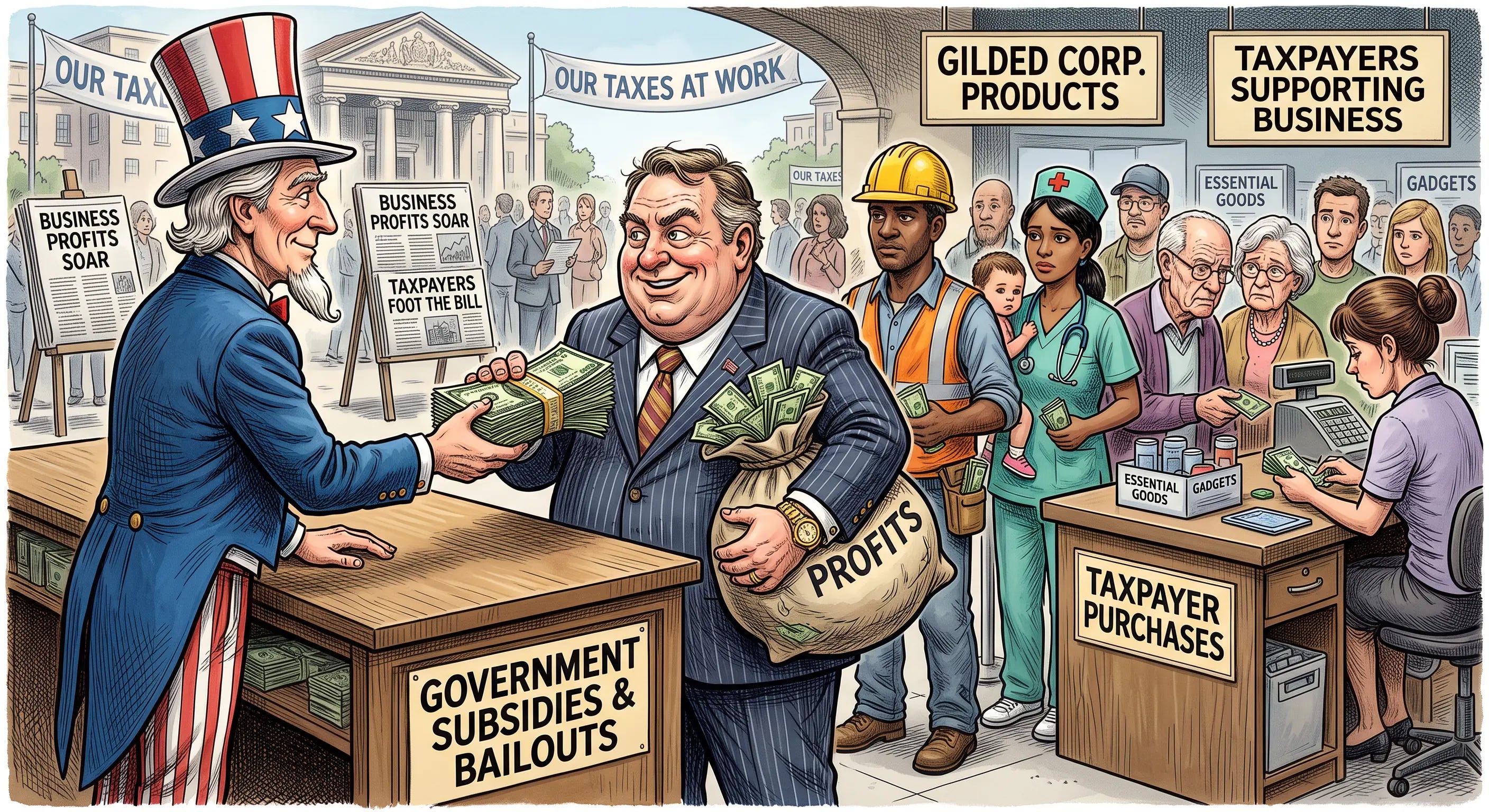
The insult, before we get to the injury
Here is what makes this different from ordinary corporate rent-seeking, and it is the part that should actually make you furious. Americans do not merely fail to get a discount on the medicines we paid to invent. We pay the highest prices on earth for them.
RAND, working under contract to HHS, compared 2022 manufacturer prices across the United States and 33 other OECD countries. Across all drugs, American prices ran 2.78 times the comparison average. For brand-name originator drugs, the category that includes every product in this article, American prices ran 4.22 times. Even after adjusting downward for the rebates and discounts American payers actually negotiate, brand prices still came in at more than three times the rest of the developed world.
Broken out by country, brand-name prices as a share of what Americans pay: Japan 22 percent. France 22 percent. Mexico 25 percent. Germany 26 percent. The United Kingdom 26 percent. Italy 28 percent. Canada 31 percent. A Canadian pays roughly a third. A Japanese patient pays roughly a fifth.
Now apply that to the drugs your taxes built. Xtandi, designed at UCLA on Army grants, costs close to $200,000 a year here and about a fifth of that in Canada, Japan, and Denmark. Zolgensma, built on nearly half a billion dollars of NIH grant funding and a stack of parents’ charity fundraisers, was priced at $2.1 million in the United States and $1.55 million in Japan. Sofosbuvir, developed by a scientist on the VA payroll, launched at $1,000 a pill in the country that employed him.
Ordinarily you pay less for a thing close to where it was made. Pharmaceuticals invert that completely. We fund the science, we host the labs, we train the researchers, we buy first and we buy most, and for that we are charged a multiple of what every other rich country pays for the identical molecule out of the identical factory.
And here is the tell. The industry does not really dispute this. Its own defense, echoed in the administration’s May 2025 most-favored-nation executive order, is that the United States has less than five percent of the world’s population and funds the overwhelming majority of global pharmaceutical innovation, while other countries free-ride on prices we subsidize. Read that argument carefully. It concedes the entire case. Everyone in the room agrees Americans are paying for the world’s medicine. The only live question is whether the fix is lowering the American price or raising everyone else’s.
The four laws that made it legal
The architecture went up between 1980 and 2003 in four moves. The first was the Bayh-Dole Act of 1980, which passed the Senate unanimously and let universities and contractors keep patent title on inventions made with federal grants. It solved a real problem: the government held roughly 28,000 patents and had licensed fewer than five percent. It also handed the government a lever called march-in, the statutory right to force a patent holder to license to someone else when an invention is not available on reasonable terms. Forty-five years later, across every administration of both parties, march-in has been used zero times.
The second was the Stevenson-Wydler Act of 1980 and its 1986 successor, the Federal Technology Transfer Act, which created the Cooperative Research and Development Agreement, the mechanism letting a private company run research inside a federal lab using federal scientists. The same law caps what a federal employee-inventor may personally collect at $150,000 a year. Remember that number when you reach the CAR-T section.
The third was quieter. A 1983 presidential memorandum from Ronald Reagan, reinforced by Executive Order 12591 in 1987, extended Bayh-Dole treatment to contractors of any size. A law written to get discoveries out of university filing cabinets now covered the largest corporations in the country.
The fourth was the surrender. In 1989, after AZT launched at $8,000 a year, NIH attached a reasonable-pricing clause to its cooperative agreements. Industry hated it. In 1995, NIH director Harold Varmus rescinded it on the argument that it was driving companies away from collaborating with government scientists. Six years, gone. Industry did not stop collaborating.
And then there was 2003
The Medicare Modernization Act created Part D and, with it, the noninterference clause: the Secretary of Health and Human Services may not interfere in drug price negotiations and may not set a formulary or price structure. The largest drug purchaser on earth walked into the market holding the most leverage anyone has ever held, and the statute tied its hands behind its back. The VA negotiates. Medicaid negotiates. Medicare was forbidden to. That single clause is a large part of why the numbers in the previous section look the way they do.
Somebody wrote that sentence. Billy Tauzin, chairman of the House Energy and Commerce Committee, shepherded the bill through the House. In December 2003, the same month President Bush signed it, PhRMA was already pursuing him for its top job. He announced his retirement from Congress and started at PhRMA the day after his term ended, at a reported salary around $2 million a year. He has always denied any connection between the two. Common Cause and Public Citizen did not find that persuasive at the time, and the Center for Responsive Politics noted he had taken more than $200,000 in drug industry campaign money in the preceding cycle.
Thomas Scully, the administration’s Medicare chief and lead negotiator on the bill, held an ethics waiver permitting him to job-hunt in the industry while running the agency. He threatened to fire his own chief actuary, Richard Foster, if Foster gave Congress the higher internal cost estimate. Congress voted on a $395 billion figure. The administration’s own budget that January put it at $534 billion. Several members said afterward they would not have voted yes had they known. The HHS Inspector General investigated and concluded no law was broken, because the administrator has final authority over what flows to Congress. Scully joined a lobbying firm ten days after the bill was signed.
The Inflation Reduction Act finally clawed back a piece of the noninterference clause in 2022, nineteen years and several trillion dollars later. Now, the seven.
1. Taxol
NCI found paclitaxel in the bark of the Pacific yew and spent three decades turning it into a chemotherapy. Robert Holton at Florida State cracked the semi-synthesis in 1989, which made manufacturing at scale possible, and FSU licensed the process to Bristol-Myers Squibb. Holton personally took roughly $140 million of the $350 million the license generated. FSU kept about $210 million. NIH, which had spent $484 million, recovered $35 million. Medicare, on its own account, paid out more than half a billion dollars for the drug. Holton died in 2025 and the obituaries described a chemist who saved a million lives, which is true. None mentioned the royalty rate, which is also true.
2. Xtandi
Michael Jung, a chemist at UCLA, and the oncologist Charles Sawyers designed enzalutamide in the early 2000s on NIH and U.S. Army grants. In 2016, UCLA sold its royalty stream to Royalty Pharma for $1.14 billion, keeping about $520 million and splitting the rest among the chemistry department, the inventors, and the Howard Hughes Medical Institute. That same year Pfizer bought Medivation for $14 billion and David Hung, who co-founded the company and did not fund the underlying chemistry, walked away with a stock and options package worth $354 million. Petitions asking the government to march in on the price were filed in 2016 and again in 2021. Both denied. An American man pays roughly five times what a Japanese man pays for a molecule the U.S. Army helped fund.
3. Sofosbuvir
Raymond Schinazi spent decades as a senior research career scientist at the Atlanta VA Medical Center while running biotech companies on the side. One of them, Pharmasset, developed sofosbuvir. Gilead bought it in 2011 for $11 billion and Schinazi’s share came to roughly $440 million. Gilead priced the cure at $1,000 a pill, $84,000 for a twelve-week course. The VA could not afford to treat its own veterans, and Congress appropriated an extra $2.7 billion so the department would not have to ration. Schinazi’s position is that the VA never funded his hepatitis C research, that the agency returned his rights, and that he had left the Pharmasset board five years before the sale. The House Veterans Affairs Committee invited him to testify in 2016 and he retired from the VA days before the hearing. Separately, Emory’s 2005 sale of royalties on emtricitabine, another Schinazi molecule, brought the university $540 million and sent him $71 million.
4. PrEP
This one carries no ambiguity about ownership, because the government owned the patents outright. CDC researchers invented the pre-exposure prophylaxis regimen and the United States patented it. Gilead sold Truvada for PrEP at roughly $20,000 a year and declined to take a license. The Justice Department sued in 2019. A Delaware jury sided with Gilead in 2023. The case settled in 2025, and the settlement gave Gilead a license to the government’s current and future PrEP patents. Read that sequence twice. The public paid for the invention, paid for the litigation, lost, and handed over the license.
5. Yescarta
The chimeric antigen receptor came out of work by Zelig Eshhar at the Weizmann Institute and Steven Rosenberg’s lab at the National Cancer Institute. Kite Pharma advanced its lead CAR-T product under a CRADA with NCI, which in practice means NCI scientists, NCI facilities, and NCI trial infrastructure. Gilead bought Kite in 2017 for $11.9 billion. Founder Arie Belldegrun netted more than $694 million. Chief operating officer Cynthia Butitta took around $160 million, R&D chief David Chang roughly $98 million. Rosenberg, a federal employee, is capped by statute at $150,000 a year. Yescarta launched at $373,000 a dose.
6. Spikevax
Barney Graham, Kizzmekia Corbett, and Jason McLellan worked out how to lock the coronavirus spike protein in its prefusion shape. That design sits inside essentially every COVID vaccine that worked. Moderna took roughly $10 billion in federal money across BARDA contracts and advance purchase commitments, then spent two years arguing its own scientists had selected the sequence without NIAID input. It signed a license with NIAID in late 2022, paying $400 million in catch-up plus low single-digit royalties. Stéphane Bancel is worth about $4.8 billion. Noubar Afeyan is at $2.1 billion, Robert Langer recently crossed back over a billion, and founding investor Timothy Springer sits near $2.2 billion. Bernie Sanders put the arithmetic to Bancel at a 2023 Senate HELP hearing: four Moderna executives and investors became more than $10 billion wealthier on the back of the public investment. Moderna then raised the commercial price to roughly $130 a dose. Graham and Corbett were capped at $150,000.
7. Zolgensma
Search spinal muscular atrophy in NIH RePORTER and you will find roughly $443 million in grants. Brian Kaspar, working at Nationwide Children’s Hospital, showed that an AAV9 vector could cross the blood-brain barrier, the step that made the therapy possible. James Wilson’s lab at Penn, which supplied the vector IP, had drawn $35.8 million in NIH funding for adeno-associated virus work. Families raised millions more through charities like Sophia’s Cure, running golf tournaments to fund a scientist’s lab. AveXis licensed the patents. Novartis bought AveXis in 2018 for $8.7 billion. Kaspar, who at one point held the largest individual stake at 6.7 percent, stood to receive more than $380 million according to the April 2018 regulatory filing, and bought a nine-acre estate in San Diego County with a stone wine cellar and horse stables. Novartis priced the therapy at $2.125 million per American child and $1.55 million per Japanese one. The FDA later determined the approval application contained manipulated preclinical animal data, and Kaspar and his brother left the company. Sophia’s Cure sued for $500 million, alleging the charity and its donors were cut out of credit and ownership once the drug looked like a winner.
Bonus: AI is running the identical play
If you think this is a pharma story, look at your phone. Siri began as CALO, a five-year DARPA program at SRI International running from 2003 to 2008 across twenty-five research institutions on roughly $150 million in public money. SRI spun out Siri Inc. in 2007. Apple bought it in 2010 for about $200 million. Adam Cheyer, CALO’s chief architect, then co-founded Viv Labs, which Samsung bought and turned into Bixby, then co-founded GamePlanner.AI, which Airbnb bought in 2023 for a reported $200 million. Dag Kittlaus and Tom Gruber rode the same wave. One DARPA program, sold three times.
Google is the larger version. The 1998 paper introducing PageRank closes by acknowledging NSF cooperative agreement IRI-9411306, with additional funding from DARPA and NASA. Sergey Brin held an NSF graduate fellowship. Stanford took 1.8 million shares for the patent license and sold them for $336 million. Larry Page and Brin each held nearly sixteen percent at IPO. The taxpayer’s return on a multi-trillion-dollar company was a line item in the Stanford endowment.
Now watch the same structure being poured in real time, at a scale that dwarfs anything else in this piece. A November 2025 executive order launched the Genesis Mission. By December, twenty-four companies had signed memoranda of understanding with the Department of Energy, among them Nvidia, AWS, Anthropic, xAI, AMD, Oracle, IBM, OpenAI, and Google. What they receive is access previously off-limits: seventeen national laboratories, exascale supercomputers, and decades of taxpayer-funded scientific data. Argonne is building Solstice, a hundred thousand Blackwell GPUs, under what DOE calls its new public-private partnership model, plus a companion system called Equinox. The order promises the resulting tools will be architecture-agnostic to avoid vendor lock-in. On the questions that actually decide who gets rich, ownership of the resulting discoveries, intellectual property, and profit-sharing, it says essentially nothing.
That is Bayh-Dole in 1980 with better hardware. Public infrastructure, public data, public scientists, private title, and pricing terms nobody thought to write down before the ink dried. If you want to know how that ends, reread the last two thousand words. Then ask yourself what an enterprise AI seat will cost an American school district in 2032 compared to a German one.
The government knows exactly how to do this
Here is the detail that removes every excuse. On August 22, 2025, the federal government converted $8.9 billion in unpaid CHIPS Act grants and Secure Enclave funding into 433.3 million shares of Intel common stock at $20.47 a share, taking a 9.9 percent stake, plus a five-year warrant for another five percent if Intel drops below majority ownership of its foundry business. The deal closed within days. Commerce Secretary Howard Lutnick framed it as securing taxpayer upside. Whatever you think of it on the merits, and reasonable people hate it from both directions, it settles one question permanently. When this government decides it wants ownership in exchange for public money, it can structure, negotiate, and close in under three weeks.
It has never once done that for a drug the public paid to invent.
What half a percent actually means
I have spent close to thirty years building software for companies far larger than mine, including Microsoft, Sony, Rockstar Games, 2K, Best Buy, and Allegiant, and a meaningful share of that work has involved negotiating who ends up owning what. So let me tell you what a 0.5 percent royalty looks like from the inside. Nobody arrives at that number through analysis. You arrive at it because the party on your side of the table has no intention of walking away and everyone in the room already knows it. Rate is a function of leverage, and leverage is a function of your willingness to say no. On Taxol, NIH held the strongest position imaginable. It owned the compound. It had thirty years of work behind it. There was no competing bidder with an alternative molecule. It signed for half a point. That is not a hard bargain badly fought. That is an agency that did not understand it was a party to the transaction.
The part nobody wants to say out loud
When march-in reform surfaces, most recently in the framework NIST floated in December 2023 that would have let agencies weigh price, the opposition is not only PhRMA. Public universities lobby against it too, through their associations and their own government relations shops, because they have royalty streams to protect. UCLA collected over a billion dollars on a drug that Californians on Medicare cannot afford at list. Emory took $540 million. Florida State took $210 million. These are public institutions whose financial interest in the current arrangement is functionally identical to Pfizer’s. That is why this has stalled under Democratic and Republican administrations alike, and why framing the fight as a morality play about pharmaceutical greed keeps losing.
The honest counterargument
Two things cut hard against the outrage version, and anyone writing about this owes them a paragraph. First, march-in would accomplish less than its advocates claim. A JAMA analysis of 883 new molecular entities approved between 1985 and 2022 found 68 with any Bayh-Dole patent and only 18 resting solely on Bayh-Dole patents, about two percent. Marching in on those would not produce generic competition at meaningful scale. Second, the people named above mostly did the work and carried the risk. Holton solved a synthesis problem that had defeated everyone else. Kaspar’s blood-brain-barrier result was real and it saves infants. Money flowing back to universities does substantially fund the next round of research. A reform that sends the next Holton to a hedge fund has not helped a single woman with ovarian cancer.
Negotiate like a venture capitalist
So here is the fix, and it is not price controls and it is not march-in, which is a legal mechanism no agency has ever had the nerve to pull.
The federal government is the earliest-stage investor in American biotechnology. It writes the first check on nearly every molecule that eventually matters, roughly $48 billion a year through NIH alone, and NIH funding touched the research behind every one of the 210 drugs the FDA approved between 2010 and 2016. It is, functionally, the largest seed fund in the history of capital. And it books its return at zero.
No venture capitalist behaves this way. A seed investor who wrote the first check into every biotech in America and took no equity would be removed by his own limited partners inside a quarter. The terms are not exotic. You put money in early, you take a position, you keep pro rata rights, and when the company sells for $8.7 billion you are on the cap table. That is not radical economics. It is Tuesday on Sand Hill Road, and it is the deal every founder in America signs without complaint because it is understood to be fair.
Apply it. When a university licenses a federally funded patent exclusively to a company, the government takes a position alongside the university, in equity or warrants, at the moment of licensing rather than at the grant stage. And it writes one more clause into the license: the American price may not exceed the lowest price the licensee charges in any comparably wealthy country. Breach it and the exclusive license converts automatically to non-exclusive. No petition, no agency discretion, no eight-year litigation. A contract term that enforces itself.
That second clause is the one that ends the 4.22x. It is also, notably, the thing the current most-favored-nation push is trying to accomplish the hard way. As of April 2026 the administration had struck seventeen voluntary agreements covering an estimated 86 percent of the branded market, backed by pharmaceutical tariffs and a public website. Voluntary deals extracted by tariff threat are real leverage, but they last exactly as long as the administration that extracted them. A clause in a patent license runs with the patent.
Two objections deserve straight answers. The government owning a controlling stake in companies it also regulates is a genuine problem, and it is why the Intel deal used non-voting shares with no board seat. Take the upside, not the steering wheel. And PhRMA will argue that equity terms drive research offshore. That is precisely the argument that killed the reasonable-pricing clause in 1995, when industry swore it would stop collaborating with government scientists. It did not stop. It got Xtandi, Yescarta, Spikevax, and Zolgensma, and it charged Americans four times what it charged the Japanese.
Twenty-four companies just signed for the keys to the national laboratories. Somebody should write down the terms this time, while we still have leverage, which is to say before the hardware ships.
About the Author
Gal Ratner is the founder and CTO of Inverted Software and WhiteStar Labs, and Chief Architect at Prana Entertainment, an enterprise software and AI consultancy in Las Vegas. He has spent nearly thirty years shipping production systems on the Microsoft and .NET stack for clients including Microsoft, Sony, Rockstar Games, 2K Games, Best Buy, and Allegiant Air, and was employee number six at Break.com during the user-generated content era. He was a Los Angeles Business Journal CTO of the Year finalist. He writes about AI architecture, engineering practice, and the distance between what institutions announce and what they actually ship. He is the author of the novel The Archive of Lost Suns.