


A salesman who could not explain his own product
Summer 1994. Musk is interning in Silicon Valley and watches a Yellow Pages rep try to upsell a small business owner on an online listing to go with the print ad. The rep cannot explain what the internet is. He cannot explain why anyone would use a computer to find a mechanic. He does not close.
The lesson was not that the salesman was bad at his job. The product worked and the buyer had no frame for it. Musk spent the next four years trying to close that gap, and he is now standing on the wrong side of the same conversation.
Twenty by thirty feet on Sherman Avenue
Global Link Information Network incorporated in Palo Alto in November 1995, three months after Netscape’s IPO made the web look like a business instead of a hobby. Musk had just quit a Stanford doctoral program after two days.
The cap table was family and friends. He put in about $2,000 and an overclocked desktop. Kimbal put in $5,000 from selling his College Pro Painters franchise. Greg Kouri, a Canadian real estate investor the brothers knew from Toronto, put in six to eight thousand and stayed on to referee their arguments. Maye Musk covered roughly $10,000 of rent, utilities, filings and flights. Errol Musk’s role is still contested: Ashlee Vance reported $28,000 in seed capital, Elon says his father took about 10% of a later $200,000 angel round.
What they built matters more than what it cost. Musk licensed a Bay Area business directory for a few hundred dollars, talked Navteq into handing over digital map data for free, and wrote C and C++ to join the two. Merchant names and addresses on one side, coordinates on the other, a query box on top. A structured, verified index of local businesses tied to geography, assembled by one guy for pocket change.
The office at 430 Sherman Avenue was twenty feet by thirty. They slept there on futons, showered at the YMCA, and drilled through the drywall to run Ethernet down to the ISP on the floor below. For investor meetings they rolled out a wheeled enclosure built around a beige desktop PC so the service would look like it ran on a mini-supercomputer. That gets retold as a charming hustle story. It was also a company selling infrastructure credibility it did not have to buyers who could not evaluate it, which is a habit that outlived the futons.
The direct-to-merchant model did not work
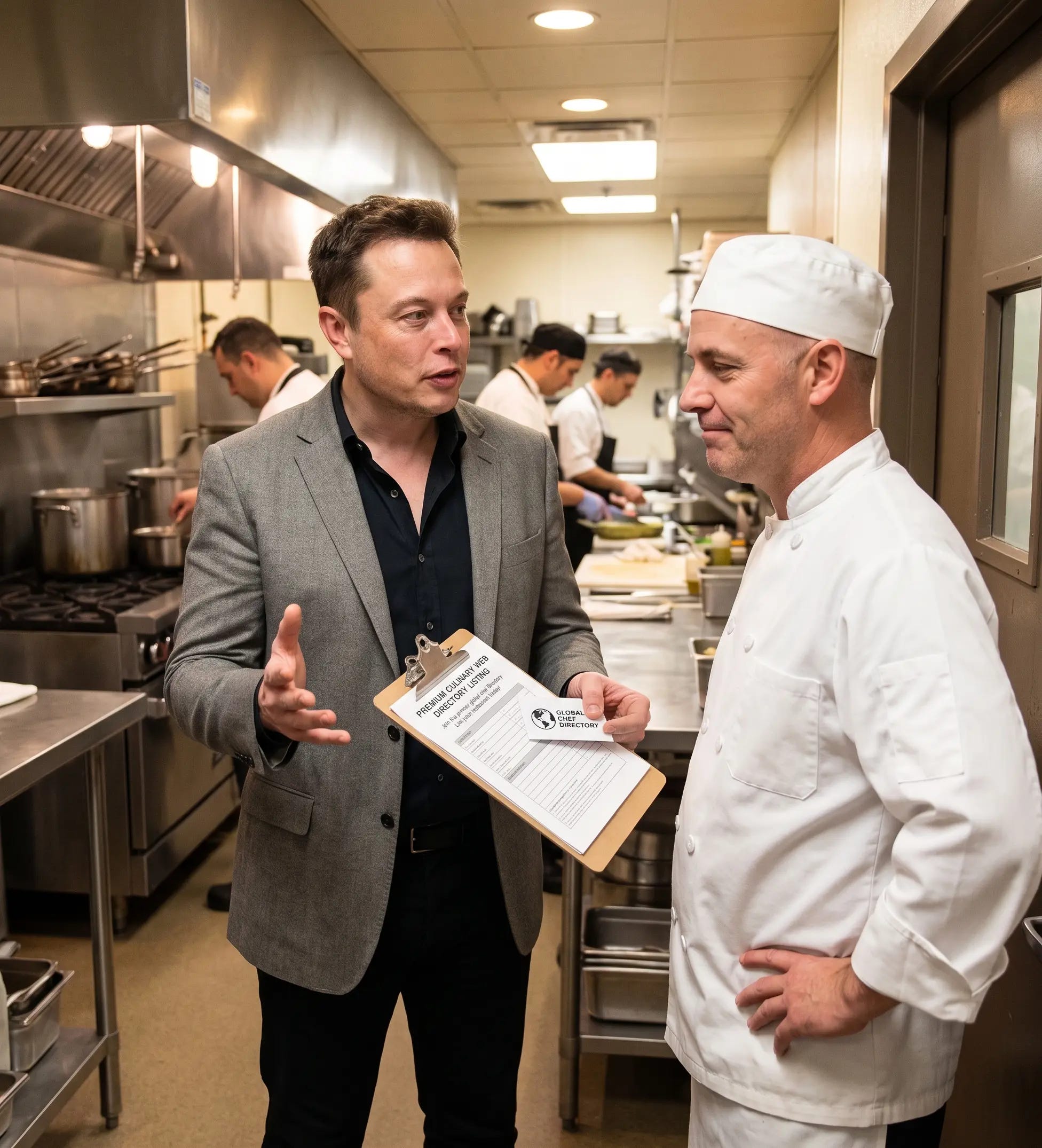
Kimbal ran door-to-door through Palo Alto, San Jose and the Santa Clara Valley. Restaurants, auto shops, salons. They added commission field reps pitching premium placement inside the directory. It failed, and the software had nothing to do with it.
Small business owners in 1995 did not own computers. Most of them thought the web was a fad, and the ones who did not still could not see why a listing justified a monthly bill. Long sales cycles, small subscriptions, and neither one covering database licensing, servers or salaries. The company ran a permanent deficit selling a product that did exactly what it claimed.
Cost to serve killed it, not demand.
I built this company in 2000 and it died too
In 2000 I wrote the ASP back end for usetheexperts.com at Web Business Development in Chatsworth. Lowell did the design. A consumer typed in a service, we returned local providers. Five years after Zip2, same product, same pitch, same wall: the contractors we needed on the supply side were not online in any way that mattered. We were selling a distribution channel to businesses whose customers had not shown up in it yet.
A decade later I learned the other half of the lesson. I gave ShoppingCart.NET away through the Microsoft Web Application Gallery, cleared fifty thousand installs, and sold zero support contracts. Installs are not revenue. Users are not revenue.
We Power the Press
Mohr Davidow Ventures put about $3 million in during March 1996 and took control with it. Rich Sorkin came in as CEO, Musk got moved to CTO, and door-to-door sales ended that quarter.
The new buyer was the newspaper industry. Publishers in 1996 had enormous classified revenue, a well-founded fear that the web was coming for it, and nobody on staff who could build a geospatial search platform. Zip2 white-labeled its directory and mapping and let each paper run it under its own masthead, under the slogan We Power the Press. The New York Times launched NYToday.com on it. Knight Ridder, Hearst, Times Mirror and Pulitzer followed. By 1998 the platform sat underneath roughly 160 to 200 daily papers.
The best engineering in the company came out of that pivot. Zip2 built a two-way web-to-fax gateway. A consumer typed an inquiry on a newspaper’s site, the platform routed it to the merchant’s fax machine, the merchant faxed back, and the reply came out the other end as a URL the consumer could open. They quit waiting for the installed base to modernize and built a bridge to it where it stood.
The Series B confirmed the strategy had won. SoftBank, Hearst Ventures, Knight Ridder and Lauder Partners brought institutional capital to $15.7 million, which turned the customer list into a shareholder list.
What folded actually looks like
Compaq bought Zip2 on February 16, 1999 for $307 million in cash plus about $34 million in options. Musk held roughly 7% and cleared $22 million. Kimbal took $15 million. Mohr Davidow made about twenty times its money. Compaq dropped the technology into AltaVista and called it AltaVista Connections.
Now go read AltaVista Company’s own S-1/A on EDGAR. In October 1999, eight months after paying $307 million, Compaq distributed a stock dividend of all its Zip2 stock to its own shareholders, leaving Zip2 owned 81.5% by CMGI and 18.5% by Compaq. The same filing records that AltaVista took a co-ownership interest in and a license to the Zip2 technology, and that equipment was transferred out of Zip2 into AltaVista. Zip2 then went to MyWay.com. InfoSpace picked over the remains in 2002. The software was offline by 2004.
That is what a fold looks like from the inside. Nobody announces a shutdown. The acquirer licenses the technology, moves the hardware onto its own books, and hands the empty corporate shell to shareholders as a dividend. The brand drifts through three owners until somebody stops paying the hosting bill.
Thirty-two years later he is the one holding the print ad
Musk has a product that works, a market that has not decided what it wants from a chatbot, and a monthly subscription to sell. He is the Yellow Pages rep now.
SpaceX’s IPO prospectus is the first audited look anyone has had inside a frontier AI lab, and it is not ambiguous. xAI lost $6.36 billion on $3.20 billion of revenue in 2025, after losing $1.56 billion on $2.62 billion in 2024. In the first quarter of 2026 the AI segment booked $818 million of revenue against a $2.47 billion operating loss while consuming $7.72 billion of capital expenditure, which was 76% of SpaceX’s total capex for the quarter. Bloomberg puts annual recurring revenue near $500 million against a burn approaching $1 billion a month.
Then there is the revenue note, which is where the real story sits. Of the $465 million in AI solutions and infrastructure revenue booked for 2025, $365 million was X and Grok subscriptions and $88 million was data licensing. Most of what the segment reports is X’s legacy advertising business, estimated around $2.26 billion. Take Twitter out of the AI company and the AI revenue is a rounding error against the losses.
The filing also says Grok reached about 117 million monthly active users in March 2026, up from 35 million in December. That is my ShoppingCart.NET problem with three more zeros on it. Huge adoption, negligible revenue, and a cost to serve that the price point cannot carry.
Those users came from distribution, not from the model. Grok’s US mobile chatbot share peaked near 17.8% in January 2026 on Apptopia data reported by Reuters, against ChatGPT at 52.9% and Gemini at 29.4%. On global web traffic it sits around 2.4% and lost share over the quarter to May 2026 while Claude and Gemini gained. Grok 5 was promised for late 2025, then Q1 2026, then Q2 2026. All three windows came and went. July got 4.5, August got 4.6.
The pivot already happened. Look at Colossus.
xAI built Colossus 1 in Memphis to train Grok: more than 220,000 Nvidia GPUs on 300 megawatts. By spring 2026 it was reportedly running at about 11% utilization. In May, Anthropic, a company Musk had publicly called evil a few months earlier, agreed to pay $1.25 billion a month for the whole facility through May 2029. Fifteen billion a year, north of forty billion over the term, cancellable by either side on ninety days’ notice. SpaceX’s own filing describes it as monetizing unused compute capacity.
Set that beside 1996. Stop charging the end user for the product. Rent the platform to whoever already has the customers. In 1996 those customers belonged to Knight Ridder and Hearst. In 2026 they belong to Anthropic.
And the first fold already happened
xAI bought X in March 2025. SpaceX bought xAI on February 2, 2026 in an all-stock deal valuing SpaceX at $1 trillion and xAI at $250 billion. In May, Musk said xAI would stop existing as a separate company. By July the corporate account was SpaceXAI and the rebrand video showed the xAI logo folding into the SpaceX mark. SpaceX listed on Nasdaq on June 12 at $135 a share.
The fit is bad and the filing proves it. Starlink is the only segment that reliably makes money: $11.39 billion of 2025 revenue, $4.42 billion of operating profit, a 39% margin, 10.3 million subscribers. The Space segment ran a $657 million operating loss. A satellite internet business is now paying for a chatbot’s training runs, and every ninety days a public shareholder gets to ask why.
Musk took the wrong lesson from Zip2 on governance. He lost the CEO seat to Sorkin, killed a CitySearch merger that would have walled him off from operations, and has organized every company since around voting control. After the offering he holds about 82.4% of SpaceX’s votes, so no board can fold Grok over his objection. Segment reporting does the same work a board does. It just does it in public, on a schedule, and the S-1 has already drawn the fence and written the number on it.
Google never made this mistake
Gemini was never asked to be a business. Google made it the answer layer sitting on top of the auction that already prints money. AI Overviews reaches roughly two billion users, AI Mode passed a billion monthly actives, and at Google Marketing Live in May 2026 the company pushed Gemini-built ad units straight into AI search: conversational discovery ads, highlighted answers, AI shopping ads, a lead-capture agent. Search and other revenue hit $60.4 billion in the first quarter of 2026, up 19.1% year over year.
Gemini did not need its own P&L. It needed to make the existing one bigger. That is what a good fold looks like, and it is the outcome Grok should want.
Where Grok fits on the evidence
Consumer chat is finished as an ambition. The leader holds more share than everyone else combined, the runner-up is strong, and point releases do not close that kind of gap while the flagship model sits in training. X advertising is too small to matter, because making a two-billion-dollar ad business somewhat better does not service a $250 billion valuation. Compute is not Grok at all, since Colossus could be carved out tomorrow and the model left behind.
Coding is a real market, and the $60 billion Cursor acquisition that closed on August 14 is the loudest admission yet that the chatbot is not the plan. Nobody pays that for an IDE and a pipeline to professional engineers while believing consumer chat is going to win. But Cursor is a product acquisition, and it does not need Grok to be the model underneath it.
The likeliest destination showed up forty-eight hours before I wrote this. On August 31, 2026 the Department of War announced it had put Starshield AI’s Grok for Government on GenAI.mil, accredited at Impact Level 5, in front of more than 1.7 million personnel. Starshield is SpaceX’s hardened, cleared branch of Starlink. Add the GSA OneGov agreement that priced Grok at forty-two cents per federal agency through March 2027, and the Pentagon prototype contract worth up to $200 million.
That is We Power the Press with a different buyer. The end user does not pay. The institution that already owns the relationship pays, for the platform rather than the interface, on a procurement cycle instead of a churn curve. SpaceX has advantages here that no other lab can touch: existing Starshield contracts, launch, clearances, and a satellite network the government already depends on. Selling an accredited model into that stack is a shorter conversation than talking a consumer out of ChatGPT.
The second destination is the assistant inside Musk-owned hardware. Grok has been in Tesla cabins since software update 2025.26, and the summer 2026 release let it control climate and settings. Grok Voice runs Starlink’s support line with a claimed 70% autonomous resolution rate. Optimus gets the voice layer. None of it is a revenue line. It is cost avoidance and product polish, and it is the web-to-fax gateway with better hardware.
Both destinations are real. Both are consolation prizes.
The fold that should have gone the other way
Zip2’s idea was right and its timing was wrong by thirty years. Ask a machine where to find a local business, get an answer with directions attached. That was not a 1995 product. It is what people are doing in 2026.
BrightLocal’s Local Consumer Review Survey, published February 11, 2026, found the share of US consumers using AI tools to find local business recommendations went from 6% to 45% in twelve months. AI is now the third-largest local discovery channel, ahead of Yelp and Tripadvisor, behind only Google and Facebook. Google’s own share of local discovery dropped from 83% to 71% over the same period. Whitespark measured AI Overviews appearing on 68% of local business queries against 39% for the traditional map pack. Angi wrote down $235.2 million of goodwill in the second quarter of 2026 while announcing an AI-native pivot, revenue down 11%, active pros down 17%. The company that won local services is impairing the asset it won with.
The Zip2 query became the mainstream query. So what would Musk need in order to serve it?
A structured, verified index of local businesses tied to geography. Precisely what Zip2 had. That index is the entire business, and it is the one component that cannot be bought quickly. Google spent twenty-five years building it. Grounding with Google Maps reached general availability in 2026 and wires Google’s models to more than 250 million verified places. Ask Maps, launched in March 2026, put a Gemini layer inside a product two billion people already open. One 2026 comparison measured local business profile accuracy at 100% for Gemini, which reads Google’s own graph, against roughly 68% for ChatGPT and Perplexity, which do not.
Grok has no graph. It answers local questions by reading the X firehose and running web searches.
I build retrieval systems in production, so let me be specific about why that is fatal rather than merely weak. Retrieval quality is capped by the corpus, not by the model. Put a frontier model on top of a thin index and what you get is confident, fluent, wrong answers arriving faster than before. A social feed is a sentiment signal. It tells you people are posting about a taco shop. It does not tell you the shop exists, is open, holds a license, or sits where the map claims it does. Parameter count does not fill that hole. Grok 5 would not fix this if it shipped tomorrow.
Zip2 fixed it in 1995 with a purchase order. A licensed directory for a few hundred dollars and free map data from Navteq. Nobody buys their way in at that price today, or at any price.
So the fold worth arguing about is not Grok into Starshield. It is Zip2 into Grok, and it cannot happen, because he sold it.
Watch what SpaceXAI is doing in commerce instead. In June 2026 it launched Go with Gopuff: Grok’s text, audio and image models running inside Gopuff’s app, against Gopuff’s catalog, under Gopuff’s brand. We Power the Press with a delivery logo on it. The model does the work and somebody else owns the inventory, the customer and the relationship. Three companies, thirty years, same seat at the table.
Twenty-six years for the answer to arrive
I have written elsewhere about usetheexperts.com at more length than it probably deserves. One finding from that work belongs here. When the New York Times covered the company’s advertising account on August 11, 2000, the entire description it gave was a single clause: a Web site that links consumers to local businesses.
That describes Zip2 exactly. It describes Angie’s List, Yelp and Nextdoor without a word changed, and it describes what 45% of American consumers now do by typing a sentence into a chat box.
I used to think being early was just a synonym for being wrong. That is half of it. Being early is survivable if you keep the asset. usetheexperts committed $25 to $30 million in billings through J. Walter Thompson in August 2000 and left behind four archived pages served on port 8080. Zip2 built a real index, sold it for $307 million, and watched Compaq hand the shell to shareholders as a dividend eight months later. Only one of those two companies ever owned anything worth keeping, and it did not keep that either.
The prediction
Grok gets folded again, and the second fold will look like the first. No shutdown announcement, just an asset reassignment. The consumer app hangs around a while as a marketing surface, the way AltaVista Connections did. The model becomes a component: the inference layer inside Starshield, inside the cars, inside the support stack, inside Cursor. In five years Grok is what people used to call the thing that answers when you talk to your truck or your government workstation.
It lands in defense instead of local commerce, and that is not a strategic choice. Zip2’s software went dark in 2004. Its real descendants are Google Maps and Yelp, and neither of them paid a cent for it.
Folded is not a synonym for failed. Musk’s $22 million became X.com, which became PayPal, which became the $100 million that started SpaceX, and I would take that trade every time it was offered. But the cash was the smaller half of what he handed to Compaq. He handed over the directory too, and the directory is the part that would matter now, sitting underneath a chatbot with 117 million users and nothing of its own to point them at.
About the Author
Gal Ratner is the founder and CTO of Inverted Software and WhiteStar Labs, and Chief Architect at Prana Entertainment in Las Vegas. He has spent nearly thirty years shipping production systems on the Microsoft and .NET stack for clients including Microsoft, Sony, Rockstar Games, 2K Games, Best Buy and Allegiant Air, and was employee number six at Break.com during the user-generated content era. He now builds production agentic AI: MCP servers, Microsoft Agent Framework, RAG pipelines and SQL Server 2025 vector search, and maintains PLogger, an open-source observability framework for agent systems. He is a Los Angeles Business Journal CTO of the Year finalist and the author of the novel The Archive of Lost Suns. He writes about the gap between what executives say about AI and what practitioners actually ship.