


On January 21, 2025, the President of the United States stood at a White House podium and announced the largest AI infrastructure project in American history.
It was called Stargate. Five hundred billion dollars. Four years.
Sam Altman was there. Larry Ellison was there. Masayoshi Son was there.
Satya Nadella was not.
That photograph is the cleanest summary of Microsoft’s last decade I can give you. The man who has invested more than thirteen billion dollars of Microsoft’s money into OpenAI was not invited to the most consequential AI infrastructure announcement in the country’s history — because by January 2025, OpenAI had already chosen Oracle.
Thirteen billion dollars. No seat at the table.
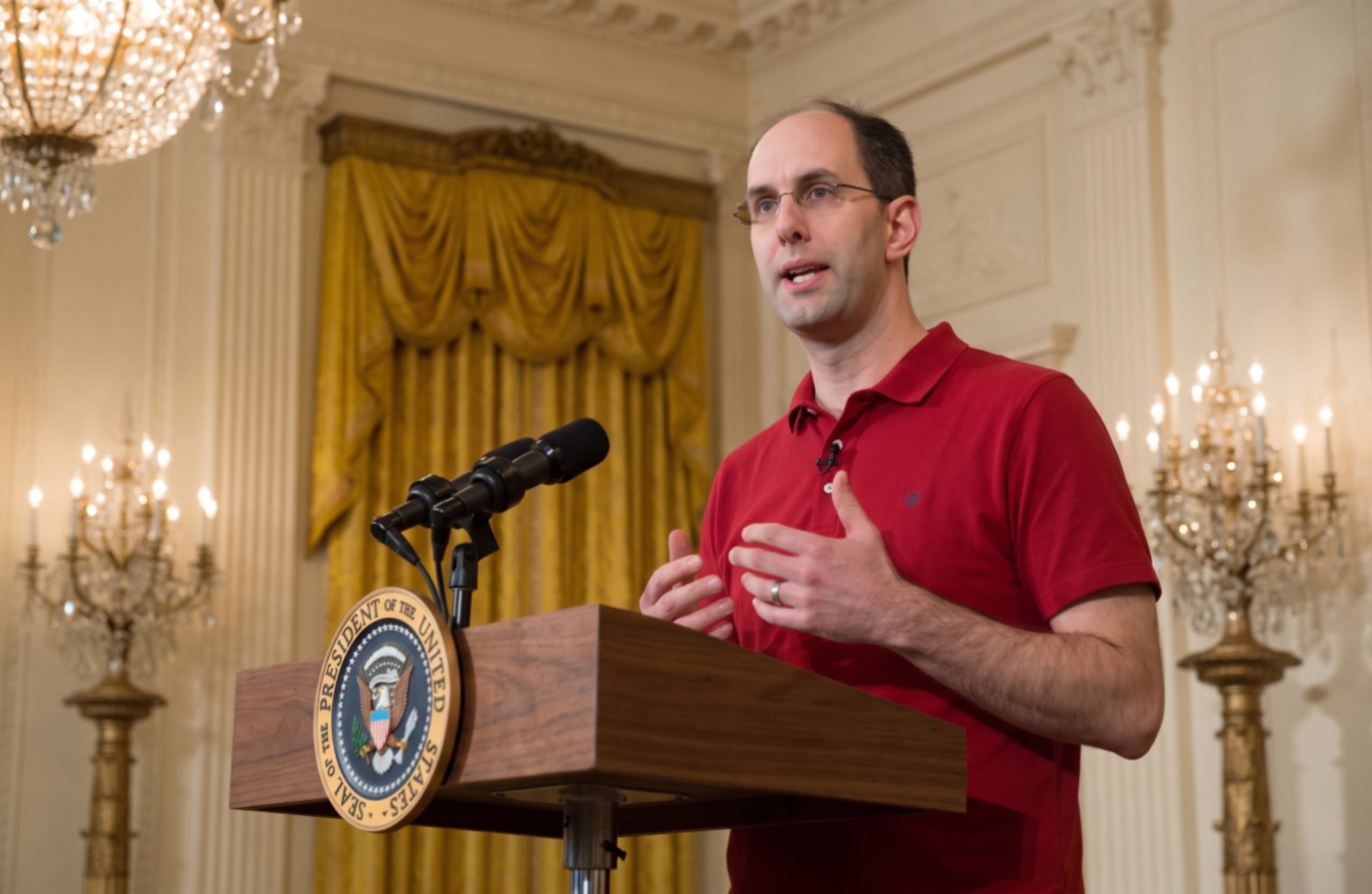
This essay is the case for replacing him.
I want to be precise about what I am arguing. I am not arguing that Satya Nadella is a bad person or a bad operator. He is, by most institutional measures, a perfectly competent global executive. He gives a good interview. The stock went up. He turned the cultural temperature down at a company famous for eating itself.
What I am arguing is much narrower and much harder to dismiss: Microsoft already has its next CEO. He has been quietly running the only profitable half of the company for twelve years. The board has been watching him do it. The org chart has been lying about who the operational CEO actually is. And every quarter that succession conversation gets postponed, Microsoft drifts further from the developer-first DNA that built it.
The man’s name is Scott Guthrie. The board owes shareholders an honest conversation about him.
Here is the evidence.
I. The Two Track Records
In February 2014, Satya Nadella became CEO of Microsoft. In that exact same month, Scott Guthrie became EVP of the Cloud + AI Group, reporting to him.
For twelve years, the two men have run parallel halves of Microsoft. One signs the press releases. The other ships the product.
The portfolios are not close.
Satya Nadella’s personal product bets, 2014–2026
Cortana — discontinued.
Mixer — acquired and killed in 2020 after the failed Twitch challenge.
Windows Phone — discontinued.
Surface Duo — flopped on launch.
Skype — Microsoft’s $8.5 billion acquisition under Ballmer, neglected for a decade under Nadella, finally killed in May 2025.
Bing Chat — the product Nadella publicly said would make Google “dance.” Google did not dance.
Windows Recall — pulled from launch in 2024 over privacy and security backlash.
Windows 11 — the most rejected enterprise upgrade in Microsoft’s history.
Inflection AI — $650 million paid to acqui-hire Mustafa Suleyman’s team for a newly created consumer AI division. The deal attracted an FTC antitrust inquiry. Suleyman now runs Microsoft AI. The flagship product his division builds — Microsoft 365 Copilot — is the AI assistant the internet now calls Microslop.
The OpenAI partnership — a multi-billion-dollar dependency on a non-Microsoft entity whose CEO was fired by his own board in November 2023 and reinstalled by external pressure inside a week, and which has since signed deals with Oracle, Google, AMD, NVIDIA, and CoreWeave that Microsoft would prefer it didn’t.
That is the public record.
Scott Guthrie’s portfolio, same window
.NET and .NET Core — the cross-platform reboot of Microsoft’s developer stack.
Visual Studio Code — the most-used code editor on Earth.
GitHub — acquired in 2018 and grown into the world’s developer infrastructure.
TypeScript — the language that ate JavaScript.
Azure — 95% of the Fortune 500, 39% year-over-year growth, over $75 billion in revenue.
Azure OpenAI Service — the only part of the OpenAI relationship that actually monetizes at scale.
SQL Server 2025 — including native vector search.
Power BI, Power Apps, Power Automate.
Maia 200 — Microsoft’s first competitive in-house AI silicon, beating Amazon’s Trainium and Google’s TPU on benchmarks.
Fairwater — the planet-scale AI datacenter network.
GitHub Copilot — the only Microsoft AI product developers actually love.
That is the public record.
You can disagree about emphasis. You cannot disagree about the columns.
One of these track records is Microsoft’s growth engine. The other is Microsoft’s reputational liability. The growth engine reports to the liability. The org chart needs updating.
II. The Governance Problem
In June 2021, the Microsoft board allowed Satya Nadella to also become Chairman of the Board.
This was a governance decision that should not have happened, and it should be reversed regardless of what the board concludes about CEO succession.
ISS, Glass Lewis, CalPERS, and most major institutional governance frameworks have flagged combined Chairman/CEO structures as a structural conflict for over a decade. The reasoning is simple: the Chairman’s job is to oversee the CEO’s performance. When you make the same person both, you have eliminated the independent oversight your shareholders rely on. The Chairman is now grading his own homework.
The Microsoft board has eleven independent directors:
Sandra E. Peterson, the Lead Independent Director. Reid Hoffman of Greylock Partners. Penny Pritzker of PSP Partners. John W. Stanton of Trilogy Partnerships. Charles W. Scharf, CEO of Wells Fargo. Hugh Johnston, CFO of Disney. John David Rainey, CFO of Walmart. Teri List, former CFO of The Gap. Catherine MacGregor, CEO of Engie S.A. Mark Mason of Citi. Emma Walmsley, former CEO of GSK plc.
Three of these directors are sitting CFOs of Fortune 100 companies. They know exactly what combined Chair/CEO governance looks like in their own boardrooms. They voted for it at Microsoft anyway.
The Lead Independent Director role exists specifically to provide a structural check when a Chairman/CEO has consolidated power. Calling executive sessions, leading evaluations of the CEO, and surfacing succession conversations are not optional duties — they are the job description. Sandra Peterson, by accepting that title, accepted the responsibility.
Twelve years of CEO performance under combined Chairman/CEO oversight has produced:
Fifteen thousand layoffs in 2025, including nine thousand in a single July round.
8,750 voluntary buyouts of US employees announced in April 2026 — the first such program in company history.
$17.5 billion committed to India in December 2025, in the same four-month window as the buyouts.
The Microslop reputational drift.
The OpenAI strategic dependency.
The empty White House podium on January 21st.
The board does not need to fire the CEO tomorrow. It needs to do three things this quarter: separate the Chairman and CEO roles, schedule an honest succession conversation, and stop pretending its current governance structure is normal. Every quarter it postpones those conversations is a quarter of accumulating personal liability for the directors themselves.
That includes the three sitting Fortune 100 CFOs who know better.
III. The Microslop Receipts
Let us look at what happens when a CEO without product taste is given twelve years to make personal product bets.
In March 2024, Microsoft paid approximately $650 million to license the AI models of Inflection AI and acqui-hire most of its 70-person team, including its co-founders Mustafa Suleyman and Karén Simonyan. The deal was structured to look like a licensing agreement rather than an acquisition. The FTC opened an antitrust inquiry anyway, on the grounds that the structure appeared designed to bypass merger review.
Suleyman became CEO of a newly created consumer AI division called Microsoft AI. His division built and now operates the consumer-facing Copilot, Microsoft 365 Copilot, and the company’s broader generative AI consumer experience.
Two years later, the AI assistant his division ships has a nickname. The internet calls it Microslop.
You can see the chain. Nadella personally championed the OpenAI dependency, which produced internal pressure to commercialize generative AI through the Office suite. When OpenAI’s organizational instability became visible after the November 2023 firing-and-reinstatement of Sam Altman, Nadella spent $650 million to bring an alternative AI leadership team in-house. That team built the Copilot products that have become the public face of his second decade as CEO. Those products are the meme.
This is not an accident of marketing. It is a sequence of personal product bets, each one a direct consequence of the prior bet not working out, each one signed off at the corner office.
Compare that to GitHub Copilot.
GitHub Copilot was built inside Scott Guthrie’s organization in 2021. It is the AI product developers actually pay for on purpose. It runs inside Visual Studio Code and Visual Studio. It is the most successful AI productivity tool currently shipping in the enterprise, and it has none of the reputational damage of its M365 sibling.
Same word. Different orgs. Different reception.
The difference is not the technology. The technology underneath is largely the same. The difference is taste, judgment, and who in the company is shipping with the customer in mind versus who is shipping to fill a strategy deck.
GitHub Copilot is a product. M365 Copilot is a tax. One of them grew up in Guthrie’s org. The other grew up in the corner office.
Twelve years. One exec ships the growth. The other ships the meme.
IV. The Hostage Situation
In January 2019, Microsoft committed an initial $1 billion investment in OpenAI as the exclusive cloud provider for OpenAI’s compute. Over the next five years, that figure grew to over $13 billion across multiple investment rounds.
Nadella made this his signature strategic move. The deal that defined his second decade as CEO. The bet that was supposed to leapfrog Microsoft over Google and AWS in the AI era.
Here is what it has produced.
November 2023. OpenAI’s board fired Sam Altman without consulting Microsoft. Microsoft’s $13 billion investment in the company was made effectively without contractual control over its leadership. Altman was reinstated within a week — but only after external pressure from employees and investors, not Microsoft’s own contractual rights. The episode was the cleanest possible demonstration of how little leverage Microsoft actually held.
January 2025. OpenAI announced the Stargate Project from a White House podium. The founding partners were SoftBank, Oracle, OpenAI, and MGX of Abu Dhabi. Microsoft was relegated to “key technology partner.” The new arrangement gave Microsoft a “right of first refusal” on future OpenAI compute capacity — but only if Microsoft could match the terms. Microsoft was no longer the exclusive cloud partner. It was now the secondary one.
September 2025. OpenAI signed a $300 billion, five-year compute contract with Oracle. The single largest enterprise cloud deal ever signed. Microsoft was not the counterparty.
March 2026. OpenAI declined to expand its flagship Stargate site in Abilene, Texas. Microsoft picked up the leftover 900 megawatts on the parcel next door. The two companies are now literal neighbors on the same plot of dirt, building separate AI futures. Fortune called it what it was.
April 2026. Microsoft AI publicly declared “true self-sufficiency” as the strategic goal — admitting in plain language that the dependency the company spent a decade building is the dependency it now has to spend a decade escaping.
This was the strategy.
Compare it to what was happening on the other side of the building.
While Nadella was wiring billions to Sam Altman’s foundation, Scott Guthrie’s organization was quietly building the things Microsoft would need if the OpenAI bet ever soured.
Maia 200 — Microsoft’s own AI inference silicon, fabricated on TSMC’s 3-nanometer process, beating Amazon’s Trainium and Google’s TPU on benchmarks.
Fairwater — the planet-scale AI datacenter network, built so Microsoft owns the substrate regardless of who wins the model race.
Azure OpenAI Service — the part of the OpenAI relationship that actually monetizes, packaged through Guthrie’s platform.
One of these strategies is a hostage situation. The other is a hedge.
The CEO who put the company in the hostage situation is now asking for five more years to dig out of it. The EVP who built the hedge has been quietly making sure Microsoft survives if he can’t.
The board does not need to choose between these men. It already did, twelve years ago, when one of them got the title and the other got the work.
Microsoft’s next CEO has been quietly insurance-policying the company against its current CEO’s biggest bet.
Promote the underwriter.
V. The Heir Apparent
Who is Scott Guthrie?
He joined Microsoft in 1997 at the age of twenty-two, fresh out of Duke University with a computer science degree. Over the Christmas holidays of 1997, he and a colleague named Mark Anders built the first prototype of a new web framework. They called it XSP. The X did not stand for anything. It just sounded cool.
That prototype eventually shipped as ASP.NET — the framework that defined Microsoft’s developer story for the next two decades. Twenty-eight years later, the language and runtime he helped birth still ships under the name .NET, now in its tenth major version, now cross-platform, now open source.
He has spent his entire career inside that lineage. He runs the development teams that built the Common Language Runtime. He helped found the .NET project. He shipped Silverlight. He shipped Windows Phone’s developer tools. He led the team that built Visual Studio. In February 2014, he was elevated to Executive Vice President of the Cloud and Enterprise Group, later renamed Cloud + AI.
Today his portfolio includes Azure, Dynamics 365, Visual Studio, Visual Studio Code, GitHub, .NET, Microsoft SQL Server, Power BI, Power Apps, Power Automate, and HoloLens. He sits one rung below Satya Nadella on the Microsoft org chart and reports directly to him. By internal headcount and direct revenue contribution, his organization is the larger half of Microsoft.
He is fifty-one years old. He still wears the same red polo shirt at every BUILD keynote. According to people who work with him, he still reviews pull requests. He still spends time with customers. He has been the highest-profile internal Microsoft executive without an accompanying personal brand for two decades — a man who has shipped product at scale while every other senior leader at Microsoft has built an outside reputation.
Fortune named him one of the twenty-five most powerful rising executives in the Fortune 500 in late 2025. The article noted, dryly, that he was already running the half of the company that grows.
He is exactly the kind of CEO that Microsoft used to produce before the marketing era. He came up through the developer division. He shipped the tools he sells. He has actual technical taste. His career arc — from a 22-year-old prototyping ASP.NET on Christmas break to a 51-year-old executive deploying $80 billion of AI infrastructure — is the Microsoft career path the company used to advertise.
When Steve Ballmer chanted “developers, developers, developers” in 2000, he was naming Microsoft’s source of competitive advantage. That source has not changed. The market has only made it more important. The developer is still the customer that decides whose stack the next decade gets built on.
Scott Guthrie is the developer.
The Microsoft board does not need to search for a CEO. It needs to recognize one.
VI. The Cost of Doing Nothing
I want to be specific about what continued postponement of this conversation costs.
In 2020, Microsoft had eight thousand employees in India. By late 2023, that number had passed twenty thousand, distributed across ten Indian cities. By April 2026, Microsoft had announced 8,750 voluntary buyouts of US employees — the first such program in the company’s fifty-one-year history — in the same four-month window in which it pledged $17.5 billion to India.
This is not xenophobia. It is concentration risk. A critical American software vendor is restructuring its labor force toward a single foreign country, with R&D and engineering disproportionately overrepresented in that move. Procurement and infosec teams at the Fortune 500 are starting to ask questions about code provenance and sovereign exposure that they have never had to ask before. Microsoft’s own press releases now use the word “sovereign” in describing its India build.
Every quarter the succession conversation is postponed is a quarter of accumulating brand damage in markets that Microsoft cannot afford to lose. American enterprise customers are noticing. Procurement language is shifting. Microslop is now appearing in IT trade press in the same category as “vendor lock-in” and “license bloat.”
It is also a quarter of accumulating talent damage. Senior Microsoft engineers do not leave for nothing. They leave because they no longer recognize the company they joined. They leave because they have read the Skype obituary. They leave because they have been to enough product reviews where M365 Copilot integration was the answer to a question nobody asked. They leave because their performance reviews now include AI-feature adoption metrics that have nothing to do with quality.
The Microsoft alumni network is now one of the most important talent reservoirs in the AI industry. The board should ask itself why so many of those alumni will never come back.
The longer the current arrangement persists, the more the answer hardens. The man who built the .NET ecosystem cannot indefinitely keep the developer audience while the man above him keeps shipping reasons for that audience to leave. There is a clock on this. The board has not been keeping track of it.
Replacing the CEO does not solve every problem on this list. Most of these problems are now structural. But it is the single highest-leverage thing the board can do, and it is the only one that resets the brand narrative quickly enough to matter.
VII. What Comes Next
Here is what I think the Microsoft board should do, in order, this quarter.
First. Separate the Chairman and CEO roles. This is independent of any succession conversation. It restores the basic governance hygiene that the board abandoned in June 2021. It is also free.
Second. Charge the Lead Independent Director with running a formal CEO performance evaluation, with succession planning as an explicit deliverable. Sandra Peterson’s job description includes this. It has been five years since the consolidation. It is overdue.
Third. Name Scott Guthrie President of Microsoft. This is the standard internal succession move at companies of Microsoft’s size — promote the heir to a clearly visible second-in-command role, give him eighteen months to handle external CEO functions, and then complete the transition. Apple did this with Tim Cook. Microsoft did this implicitly with Nadella in the years before Ballmer’s exit. Guthrie has been doing the operational job for twelve years already. He has earned the title.
Fourth. Communicate the change to shareholders honestly. The current CEO’s tenure produced real wins, and those should be acknowledged. The Azure cloud business under Microsoft’s roof is one of the great corporate-strategy success stories of the modern enterprise era. So is the GitHub acquisition. The story Microsoft can tell its shareholders is not that Nadella failed — it is that he succeeded, the company grew, and now it is time for the next generation to lead. That is a clean story. It is also true.
I do not expect any of this to happen because of one Substack essay.
I do expect it to happen eventually. The structural pressure is too obvious, and the alternative is too costly. Microslop does not heal on its own. The OpenAI dependency does not heal on its own. The India concentration risk does not heal on its own. The combined Chairman/CEO governance flag does not heal on its own. Each of these is a problem that compounds quarterly until the company addresses it at the level of leadership.
What I do expect is for the conversation to start in public, where it has been studiously avoided in private. That is what this essay is for. It is a piece I wrote because I have spent thirty years inside the Microsoft developer ecosystem, watched it grow up, and watched what is happening to it now. I owe it the truth about its present.
So do you.
If you work at Microsoft and you are reading this
Share this. Tag the man in the red polo. Use the hashtag the company hates. Tell your story. The board will not move on its own. It will move when it becomes clear that the inside of the company knows what the outside of the company already suspects.
If you are a Microsoft customer or a Microsoft investor
Write to the board. Sandra Peterson is the Lead Independent Director. The board’s contact information is public. Boards of $3 trillion companies do read incoming shareholder mail. They do not act on every letter, but they do act on volume.
If you are a journalist who covers technology
This is a real story. There is a quiet succession argument inside Microsoft right now. The data is public. The org chart is public. The product receipts are public. The White House photograph is public. The story writes itself.
And if you are Scott Guthrie
I do not know if you read Substacks like this one. I doubt it. You have a company to run. But if this somehow finds its way to your desk: there are several million developers, customers, and former colleagues who are quietly hoping the board does the right thing.
Microsoft’s next CEO is already inside the building.
Promote the underwriter.