


In 2021 a Toronto company called Tokens.com paid a record $2.4 million for virtual land in the metaverse. In 2024 it bought Simulacra, the Las Vegas parent of Abyss Creations, which manufactures RealDoll, for $16.7 million in stock. It renamed itself Realbotix. This summer it sold a humanoid robot to a public high school in Cattaraugus County, New York. It is now reverse-merging its robotics subsidiary into Onconetix, a Nasdaq-listed biotech whose flagship asset is a prostate cancer diagnostic licensed to Labcorp.
Virtual real estate, silicone companions, classroom androids, a prostate test. Five years, four business models, each one announced as the natural next step from the last. All of it sits in the filings. None of it is a bit I made up.
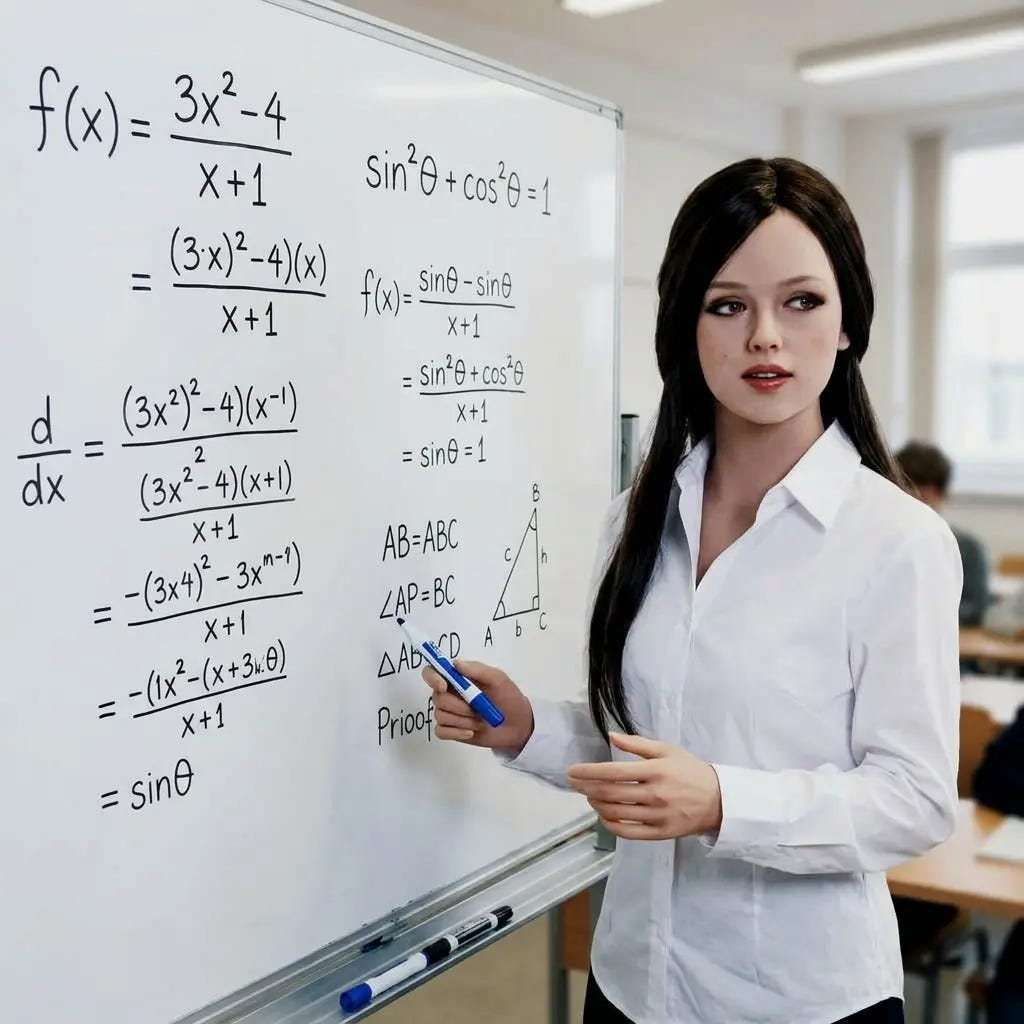
The robot is named Sally. Five foot two, seated, silicone-skinned, long brown hair, and what the Albany Times Union described as bee-stung lips suggesting Angelina Jolie. Salamanca City Central School District agreed to pay $57,590 for her, plus $1,990 a year for software updates and for the controller that loads approved content. She was scheduled to greet eleventh and twelfth graders this month.
The crossover that legally does not exist
When New York Focus broke the story in July, the company’s response arrived fast and in triplicate. Realbotix LLC and Intima LLC, the entity holding the RealDoll stake, share no employees, no payroll, no facilities, no blueprints, no manufacturing, and no go-to-market strategy. Sally is a newly built M-Series unit assembled by Realbotix LLC staff at a Realbotix LLC facility. An attorney contacted publications to reinforce the point. Kotaku ran a correction. TechSpot ran a correction. Futurism updated its piece to clarify the corporate structure.
The separation argument would land better if the company had not announced on February 19 that Matt McMullen, who built RealDoll starting in 1997 after a job making Halloween monster masks, was becoming its chief creative officer. Inc. checked the executive team page and the investor page while reporting the Salamanca story. Both still listed him as founder and CCO. The company told Inc. he has no role in commercial robotics, the Optio platform, or the school deployment. Two pages on the company’s own website disagreed with the company.
The bill of materials is the wrong thing to argue about. Two months of coverage went to it, and nobody read the quarterly.
Read the Q3 filing
Realbotix Corp. reported results for the three and nine months ended June 30. Consolidated revenue was $354,000 for the quarter and $932,000 for the nine months, and $222,000 of that quarterly figure came from Intima LLC. Then, in the same release, describing its own two subsidiaries, the company writes that Realbotix LLC has historically accounted for less than five percent of overall revenue and sixty-five percent of overall operating costs.
So the enterprise robotics division, the one going into schools and hospitals, generates under a twentieth of the money and burns roughly two thirds of the spend. Adult products bring in most of the revenue. The doll business is paying for the school business, and that comes from the parent company’s own disclosure on SEDAR+, filed three weeks after the Salamanca contract made national news.
The surrounding numbers are worse. Q2 revenue was $225,000 against $1,746,000 in operating expenses, at a gross margin of negative 1.7 percent. The comprehensive income line was rescued by one-time gains from debt repayment and from selling the Tokens.com domain for about $2.5 million, meaning a meaningful chunk of last year’s profitability came from liquidating the name of the previous business model. The stock trades around sixteen cents.
Salamanca’s $57,590 is roughly sixteen percent of an entire quarter’s consolidated revenue. That is why a single rural school district gets called a flagship deployment.
On the hypothetical shipping error
What happens if the warehouse mixes up two boxes? Everyone asks it first, and the company’s answer is that the question is incoherent: no shared warehouse, no shared staff, no shared product line. Fine. Grant it. The farce works better if you accept the premise than if you doubt it.
If the crates did swap, what would give it away? Both units are silicone over an armature, built in the same city, sold by subsidiaries of the same holding company, marketed with identical language about lifelike presence and meaningful human interaction. What separates them is a firmware load, an org chart, and a legal opinion.
You would find out by talking to it. The unit would explain the quadratic formula, decline to discuss sex, violence, or gambling per its configured guardrails, offer tutoring in a hundred languages, and generate an invoice for $1,990 a year for the controller. Product differentiation in this category is a content policy and a subscription.
The question nobody asked at the board meeting
Salamanca holds parent-teacher conferences twice a year. Come November, a parent sits down across from a five-foot-two silicone figure to discuss their kid’s progress in eleventh grade chemistry, having spent the summer reading national coverage of the corporate parent’s other holdings. Every adult in that room will have the same question. Not one of them will ask it out loud.
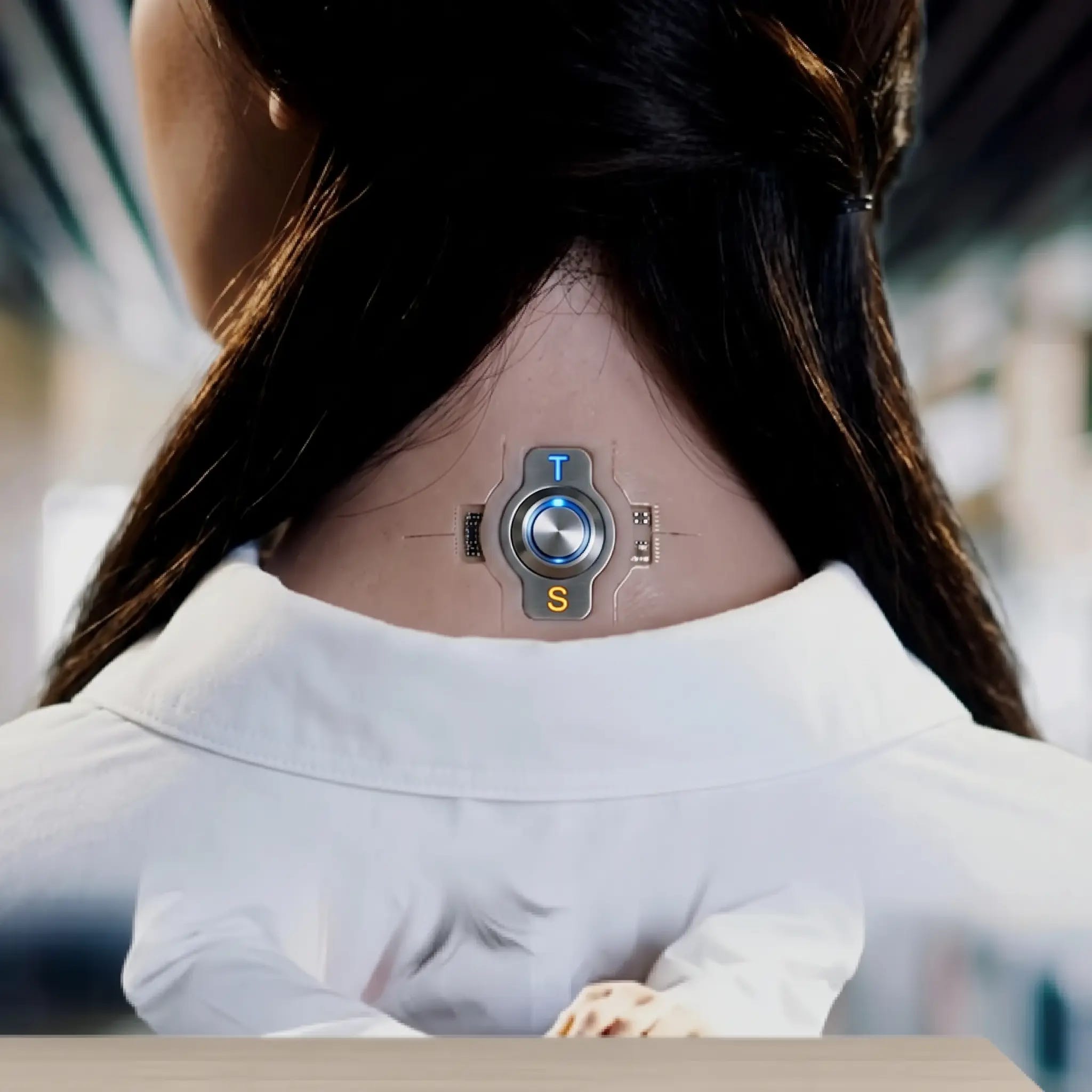
The company has already answered in the only register it uses. There is no mode. No shared hardware, no shared blueprint, no shared assembly line, and an attorney who will contact your publication if you imply otherwise.
Grant that too. It still misses, because the boundary everyone cares about was never a property of the body. It is a config file. Sally is programmed to redirect conversations away from sex, violence, and gambling, and that policy runs on a controller the district holds, updated through a subscription the district renews at $1,990 a year. Sensible policy. Also a file. The distance between a machine that explains an Arduino board and a machine that requires an emergency board session is one deployment, and the organization shipping those deployments has negative gross margin, sixteen-cent stock, and a reverse merger pending.
Nobody at that board meeting asked who at the vendor holds commit access to the guardrails. Or what the rollback procedure is. Or whether a bad content push gets caught before a student hits it or after. Those are the questions with answers.
The one class she is configured not to teach
Optio, the laptop avatar that will carry most of the teaching load, is sold on around-the-clock access. Photograph your homework and upload it. Ask anything. Get an answer in a hundred languages, at eleven at night, with nobody watching. That last clause is the product. Privacy from adults is the thing a tutoring avatar offers that a classroom cannot.
Salamanca is the only incorporated American city sitting entirely on a Native American reservation. It enrolls about thirteen hundred students, four in five of them economically disadvantaged, in a rural county where clinical resources are thin. New York requires health education in high school.
There is exactly one category of that curriculum where a private, patient, always-available, non-judgmental reference would matter most to the students in this district, and it is the category the vendor had to wall off before it could sell anything to anybody. Sally is configured not to go near it. Neither is Optio. A student who asks gets redirected.
That redirect exists because the parent company owns a stake in RealDoll and is trying to close a Nasdaq listing by October. It protects a transaction. It may also be the right call for everyone involved, and the outcome holds either way: Salamanca bought an instructional tool with a hole in it shaped precisely like its vendor’s cap table.
The human health teacher carries no such restriction, needs no controller license renewal, and cannot be reconfigured from Toronto.
The design bet runs against the literature
Nobody in the procurement chain appears to have asked why an educational device inherited the face, proportions, and marketing vocabulary of a companion product. Not the vendor, not the board, not the district. Realbotix did not design an education robot. It designed a humanlike robot, found the adult market small and shrinking, and went looking for verticals. Education is a vertical. So are hospitality, healthcare, and retail concierge. The face came first and the use case was assigned afterward.
The premise underneath the product is that physical human likeness improves engagement, and therefore learning, relative to a chatbot on a laptop. The CEO says AI lives behind a screen for most people, and giving it an identity makes it approachable and relatable. He also concedes the company has no empirical evidence that the lifelike machine improves learning outcomes. Inc. put that concession in its second sentence and the company did not dispute it.
Two decades of peer-reviewed work exist on social robots in classrooms. The Belpaeme review in Science Robotics found real cognitive and affective gains from robot tutors on restricted tasks, driven mostly by physical presence. It also found the weighted average height of the robots in that literature is sixty-two centimeters. The workhorses are Nao, Keepon, Pepper, iCat. Small, stylized, unmistakably machines. Shorter robots are frequently preferred for teaching. Sally is a hundred and fifty-seven centimeters of adult human likeness, sitting at the far end of a design axis the field spent twenty years moving away from.
The literature is blunt about novelty. Multi-session studies find motivation spikes on first contact and decays as the machine stops being new. Separating a teaching effect from a shiny-object effect is the central methodological problem in the field, and some studies find overly social robot behavior distracts from the learning task outright. Ryan Schaaf, who teaches educational technology at Notre Dame of Maryland, told Inc. that novelty is not the same as learning. He wants the district to compare students using the robot against students using the laptop avatar against students using neither, then measure retention and time on task after the novelty wears off.
Schaaf’s other concern is harder to dismiss. A convincing human face invites students to attribute understanding, authority, and empathy to software that has none, and it makes wrong answers sound more credible than identical text on a screen. The company selected for maximum persuasion and has nothing to set against it.
Salamanca planned none of the evaluation Schaaf described. The superintendent said it would be mostly qualitative, gathered from student and teacher feedback, with quantitative data limited to anonymized usage counts. Logins and minutes. You can hit those numbers with a vending machine. What the fifty thousand dollars of body buys over the software alone is the one question the deployment exists to answer, and it is not on the measurement plan.
What shipping this stuff actually looks like
I build production agents for a living, in Las Vegas, in the same city where Realbotix issues its press releases. One of mine handles wedding planning for a local chapel. It talks to real customers about real money on real dates that cannot slip, and I can tell you exactly where the engineering hours went. None of them went into personality.
They went into tool contracts and retry semantics. Into deciding what the agent is permitted to promise. Into the eval harness that catches a regression before a bride does. Into the unglamorous, load-bearing question of what happens on the turn where the model is confident and wrong. The agent has no face. Nobody has ever asked it for one.
Realbotix sold a face and a subscription. Optio is the part of the package with plausible educational value, and also the part that does not require fifty thousand dollars of silicone. Salamanca bought both, because the silicone is what generates the press release.
Nothing on the books stopped it
The pilot is on hold. Salamanca announced the pause on July 24, hours after the State Education Department sent a letter raising concerns, citing enhanced student data privacy agreements. The state teachers union said the robot has no business in a classroom.
NYSUT then put it better than the coverage did. What stopped the robot was not a law, not a regulation, and not any policy of the State of New York, because no such policy exists. It was an investigative news story, the parents and educators who read it, and a commissioner’s letter. Absent those three, Sally would be seated in front of five hundred students this month and nothing on the books would have required otherwise.
Six in ten public school teachers used AI for work last academic year. Eighteen percent got any formal guidance from their administration about how. A San Diego charter network spent half a million dollars on two Ameca robots. Vendors are moving faster than procurement rules, and the rules are being written retroactively by reporters.
The sex doll lineage is what made this story travel, and it is the least interesting thing in it. Strip the silicone out entirely and you still have a company with negative gross margin and no evidence for its core product claim, selling a $57,590 device into a district where four in five students are poor, under an evaluation plan that counts logins. That version would never have reached the national wires. It is the one the next school board should read.
About the Author
Gal Ratner is the founder and CTO of Inverted Software and WhiteStar Labs, and Chief Architect at Prana Entertainment, an enterprise software and AI consultancy in Las Vegas. He has spent close to thirty years shipping production systems on the Microsoft stack for clients including Microsoft, Sony, Rockstar Games, 2K Games, Best Buy, and Allegiant Air, and was a Los Angeles Business Journal CTO of the Year finalist.
His current work is production agentic AI: MCP servers, the Microsoft Agent Framework, RAG pipelines, SQL Server 2025 vector search, and the PLogger observability framework. He builds and operates shipping agents, including a shopping assistant for ShopSnap storefronts and a wedding planning agent for a Las Vegas chapel. He is also the author of the novel The Archive of Lost Suns.
He writes about the gap between what executives say about AI and what practitioners actually ship. More at galratner.substack.com.
Primary sources
Realbotix Corp., Q3-2026 interim results, three and nine months ended June 30, 2026 (TSX-V: XBOT) — revenue split and the “less than 5% of overall revenue and 65% of overall operating costs” disclosure.
Realbotix Corp., Q2-2026 interim results, three and six months ended March 31, 2026 — revenue, operating expenses, gross margin, Tokens.com domain sale.
Onconetix, Inc., Form 8-K and Form 425 filings, SEC EDGAR — share exchange agreement, 75–90% ownership at closing, Kiguel as CEO of combined company.
New York Focus, July 14 and July 28, 2026 — original reporting and the Optio interview.
Inc., “This New York School Is Becoming a Humanoid Robot Company’s Biggest Test,” July 20, 2026 — pricing, the $1,990 annual fee, McMullen contradiction, Schaaf and Beehler interviews.
NPR, July 29, 2026; Times Union, July 23, 2026; WKBW, July 28, 2026 — the pause, NYSUT statement, district guardrail claims.
Belpaeme et al., “Social robots for education: A review,” Science Robotics 3, eaat5954 (2018) — effect sizes, robot height distribution, novelty effect.
Gallup, teacher AI usage and formal guidance, 2024–25 academic year.